


Jeff Colley is the editor of Passive House Plus. He won the Green Leader award at the 2010 Green Awards for his advocacy work on the inclusion of energy ratings in property advertising, and a proposal to finance energy upgrades via utility bills.
He established Construct Ireland (for a sustainable future), Ireland's pioneering sustainable building magazine, in 2003. The magazine evolved into Passive House Plus in late 2012, the world's first English language magazine focused on passive house, as well as other aspects of sustainable building.
He is also a founder of Éasca, (the Environmental and Sustainable Construction Association) , an organisation set up to develop and promote a membership of approved companies offering genuinely sustainable solutions.
He writes a regular column for the Sunday Times, and has authored, co-authored and contributed to articles on sustainable building for numerous newspapers including the Irish Times, The Sunday Business Post, the Irish Examiner & the Sunday Tribune.
76% of new builds go passive or near passive
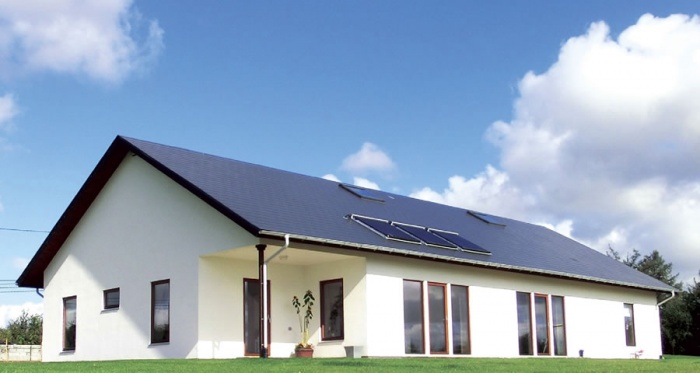
Over three out of four domestic new build enquiries to Construct Ireland are from people aiming for certified passive or near passive standards, the latest data from our reader enquiry service reveals.
The enquiry system connects readers looking to build or upgrade with the sustainable product and service providers who advertise in the latest issue of Construct Ireland.
SEAI opens up with Building Energy Rating database

In an act of laudable transparency, the Sustainable Energy Authority of Ireland has put every the details of every Building Energy Rating yet published for dwelling in the country online. The SEAI National BER Research Tool includes information from almost 290,000 BERs for new and existing homes that have been published to date, along with provisional BERs.
Central Bank pay double for Anglo site, green regenerative proposal shunned
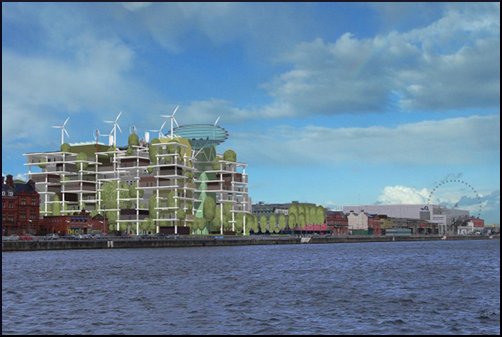
The Central Bank's reported €8m bid for the site on which the defunct Anglo Irish Bank's ghost HQ sits may be double the market value, it has been claimed.
Architect Paschal Mahoney – who is heading up the innovative Trees on the Quays proposal to create a landmark vertical park from the iconic concrete shell for the Anglo HQ – had an independent valuation of the site done as part of a proposal to turn the defunct structure into a symbol and catalyst of Ireland's regeneration.
"I've heard from several sources that people have valued it and the price the Central Bank are offering may be about twice the actual value," Mahoney told Construct Ireland. "We've had it independently valued too. The price being offered is almost twice what the valuers have told us its worth. The taxpayer would be paying €8m for something we already own."
Cygnum innovation cuts costs on closed panel cellulose
Leading Irish timber frame manufacturer Cygnum is launching a pioneering closed low embodied carbon panelised building system that integrates cellulose insulation.
The Precision system has been developed by the company to drive down the costs of a building system that’s becoming increasingly popular due to its thermal performance, healthiness and low environmental impact.
Rise of the passive house
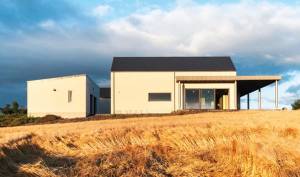
It could be a reflex response to the shockingly poor construction standards that came to define Ireland’s boom years, but the world’s leading low energy building standard is starting to thrive in Ireland. As the several case studies following this article reveal, a groundswell of Irish clients, designers, contractors and manufacturers are starting to recognise the opportunities available in becoming early adopters of a standard destined for exponential global growth.
Cuts to insulation grants will cost jobs, warns Construct Ireland
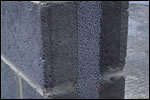
The government's cuts to its Better Energy grants will cost jobs and make it extremely difficult for Ireland to meet its retrofit and energy reduction targets, green building magazine Construct Ireland has warned.
Following the budget, the Sustainable Energy Authority of Ireland reduced grants for cavity wall insulation from €320 to €350. Grants for internal and external wall insulation were also reduced — previously these were €2,000 and and €4,000 respectively, but now separate rates have been introduced for different house types, with the maximum being €1,800 for internal insulation and €3,600 for external.
Unpublished SEAI report showed systemic building control failure
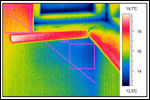
An unpublished 2005 Sustainable Energy Authority of Ireland report found that new homes were failing to meet minimum energy efficiency, ventilation and fire safety regulations during the boom.
Part L changes

On 7 June 2011 environment minister Phil Hogan TD signed the latest changes to Part L of the building regulations into law, which will make it mandatory for all new homes to be 60% more energy efficient than the standards at the peak of the construction boom. Jeff Colley sheds some light on the key changes
Energy upgrade programmes escape budget cuts

Government subsidies for energy efficiency and renewable energy have come through Budget 2011 unscathed in spite of swinging cuts across the economy.
Energy minister Eamon Ryan TD has announced a budget of €99m for energy upgrading Irish buildings in 2011 as the government ramps up for the launch of the National Energy Retrofit Programme (NERP).
Wufi training workshop to be held in Dublin next month
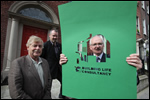
The Building Life Consultancy and Fraunhofer Institute for Building Physics are providing a two-day Wufi Pro training workshop in Dublin on 14-15 December.
This is only the third English language workshop of its kind to be offered in Europe according to the Building Life Consultancy, and will train members of the construction industry to use Fraunhofer’s Wufi Pro software for hygrothermal (heat and moisture) simulations of building fabric.