


Lenny Antonelli is deputy editor of Passive House Plus. He also writes regularly for the Irish Times, and has contributed to a variety of other publications including the Sunday Times, the CS Monitor, Village, the Sunday Tribune amd the Dubliner. He is currently working on a radio documentary on Ireland's oceans.
Green building & energy links, Nov 27
You know how that famous old saying goes - there's nothing quite like some green building and energy links on a Friday afternoon.
How Malmo was transformed from a deteriorating city into a model of sustainability: Treehugger
Ecotricity launches a "green gas" derived from landfill waste - I'd be curious to hear readers' opinions and comments on this: Energy Savings Trust
Storing heat with phase change materials: Green Building Advisor
The Guardian's guide to buying a wood burning stove: Guardian
Norwegian firm tests ground-breaking osmosis power plan: Guardian
Replacing ugly construction site barries with living walls: Inhabitat
Global body needed to direct green technology, says G77: Guardian
Government aims to upgrade a million homes
Harry McGee writes in the Irish Times.
However, the new scheme would vastly accelerate the retro-fitting of the national housing stock, with upwards of 90,000 dwellings a year being retro-fitted over a period of 10 to 12 years.
The funding model would also radically alter in order for change of that magnitude to be achieved. Officials believe that extending the grant scheme would not be feasible or realistic.
Instead, electricity and energy utility companies would be given new obligations to reduce progressively the amount of energy they generate each year.
Their roles would change to allow them to offer retro-fitting services and financing. Homeowners would get an assessment carried out by the utility. After completion, the cost would then form part of the utility bill, to be paid off over a long period of time.
SEI announces 2009 sustainable energy award winners

The retail and telecoms sectors were the big winners at Sustainable
Energy Ireland's sixth annual awards in Dublin last Friday, with Dunnes
Stores, Heatons, O2 and Eircom each taking awards at the all-island
event.
The awards aim to highlight "excellence in business energy management", and this year included entries from over 100 organisations.
Are we focusing too much on building energy efficiency in Ireland?
During Plan Expo earlier this month I had a chat with Amanda Gallagher and Eanna Nolan from BRE Ireland. Both raised what I thought was a valid point - that so far the drive towards green building in Ireland has focused a lot on energy use and very little on the embodied energy of building materials. After all, if we're to drastically reduce the carbon footprint of buildings, both must be tackled.
Green building standards in other countries aim to do just that: In the UK there's the voluntary Code for Sustainable Homes, which rates homes based on criteria including water efficiency and use of materials as well as energy efficiency. The BRE's own Breeam rating system (which is just taking off in Ireland) for non-domestic buildings examines a similarly wide range of criteria, as does the US Leed system.
Why have we been comparatively slow to focus on materials and other sustainability criteria here? Is it a result of the dominance of a carbon-intensive building industry - traditional concrete - here, or is it down to something else?
Clinton proposes Pay As You Save type stimulus
It seems the White House is considering a national weatherization ('energy upgrade' in our language) programme for 2009 that, according to GreenBuildingAdvisor.com, will aim to "demystify weatherization for homeowners, help contractors market a new set of government incentives to weatherize, and create a rush to retrofit".
Two strategies have been proposed for the programme - more details here - but I'm just going to mention the one proposed by Bill Clinton, because it's quite simililar to the Pay As You Save scheme proposed by us at Construct Ireland.
Richard Defendorf writes:
The Clinton plan... would apply to both residential and commercial improvement projects, would reallocate clean-energy money from the stimulus bill that has not yet been spent and would offer building owners a fixed set of climate-appropriate improvements designed specifically for buildings in their region. This plan also includes a financing program that would attach the loan payments to the upgraded property’s tax bill, working in much the same way as the bond-funded Property Assessed Clean Energy program has been working for dozens of municipalities and many states (PACE was adopted this week by the state of New York).The logic of letting homeowners pay for upgrades over time on their energy bills continues to catch on.
21st century fox
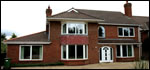
Government incentives are crucial to sparking a massive energy upgrade of our housing stock, but practical examples are just as important. Keen to push his home's energy performance to the limits, one Dublin homeowner overhauled his entire building fabric and installed renewable heating systems and heat recovery ventilation. Lenny Antonelli visited the house.
Creature comforts
Not only does the new OPW-designed district veterinary office in Drumshanbo Co. Leitrim place strong emphasis on natural ventilation and lighting, it rests comfortably in the rural landscape and boats commendable green features too. Lenny Antonelli reports
Intl. green buildings II
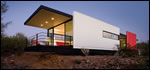
In the second installment of a new feature on international green buildings, Lenny Antonelli takes a look at four innovative, sustainable and striking buildings from around the world.
Onerous new green building standard launches
The International Living Building Institute - no I hadn't heard of it either - has just released the latest version of its green building standard, which appears to go beyond any other building rating system out there. Any "certified living building" must be net-zero energy, net-zero water, provide for restoration habitats, and include space for food growing, among other requirements.
Rather than just being rated based on plans or an initial inspection, buildings aspiring to the standard must be surveyed a year after construction is finished.
Full details on the standard can be downloaded here.
New free tool for calculating the carbon footprint of buildings
The Rocky Mountain Institute has just launched Green Footstep, a free online carbon calculator that it claims can assess emissions over a building's life-cycle.
One of the program's developers, Michael Bendewald, explains how it works: "Since we all have bank accounts, allow me to use an accounting metaphor to explain Green Footstep's way of showing a project's carbon emissions. The native-state carbon storage of a site, including such things as standing timber and other vegetation that existed before development, is the amount of carbon the owner of the facility ‘owns.’ Any carbon emissions send the owner into a ‘carbon debt.’ In order for a project to be ‘carbon neutral,’ this debt must be paid off and the original amount of carbon – equal in magnitude to the native-state carbon storage – must be restored. Green Footstep allows designers to adjust design targets, such as building energy use intensity and incorporating more renewables, that will get the building out of the carbon debt, edging the building closer to carbon neutrality."
I wonder if the software will provide the depth of detail that many green architects and designers look for in tools like this. If anyone tries it, let us know. The tool is available here.