


I am an experienced and accomplished journalist specialising in sport, the arts, business, politics and construction. Long-term clients who trust and respect my work include Channel 4, Channel 5, The Guardian and The Times, and I also work for trade publications, such as the Chartered Institute Of Building's quarterly magazine, iCON. Editors love my meticulous approach and clear writing style. For example, one editor said of a feature on the Chinese earthquake: "What a story. Elegantly, even gracefully written."
Thinking inside the box - Victorian semi retrofitted as a house within a house
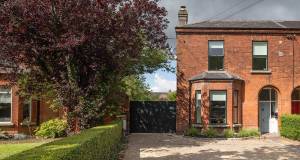
Facing the challenge of how to bring a Victorian home with damp old brick walls up to a modern low energy standard, architect Brendan O’Connor deployed an innovative solution: build entirely new and superinsulated timber frame walls within the old structure.
Award-winning passive house makes elegant mark on the South Downs
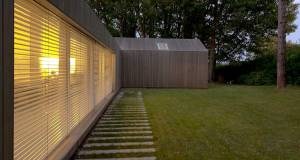
Despite the challenges of getting planning permission within a national park, a new passive house on a hillside in the South Downs managed to woo the planners with a sympathetic, discerning design inspired by a surprising source — two dilapidated old chicken sheds.
Sea change — luxury passive scheme on the Devon coast
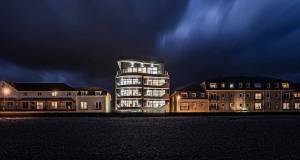
Built mostly with clay blocks and sited above the sandy shores of Seaton, on the Devon coast, this new development of eight high-end apartments not only meets the passive house ‘plus’ standard — meaning it pairs the requisite ultra-low energy fabric with a substantial amount of renewable energy generation — but it also boasts serious attention to the use of ecological and healthy material.
Good stock - Stylish Stockport retrofit achieves radical energy savings
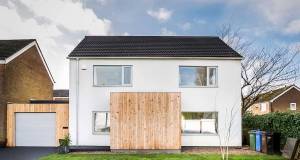
This inspiring project may be exactly what the deep retrofit sector needs: an example of how to turn a bog standard, cold suburban home of little architectural merit into a climate champion delivering outstanding levels of energy performance, comfort and health, all while transforming the building architecturally.
Coasting home - Beautifully designed Hampshire home breezes past passive standard
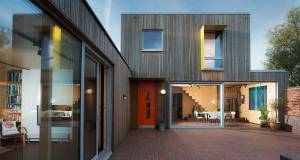
‘Architecture is the blissful moment when the site and brief come together,’ says architect Ruth Butler of the challenge she and her engineer husband faced in designing their family home, on a difficult urban site by the Hampshire coast. But it was a challenge they met and exceeded, because even though they hadn’t even planned to build a passive house, they soon realised the design was on course to meet the onerous energy standard anyway.
Strong and stable - East Sussex home with a striking farmyard inspired design
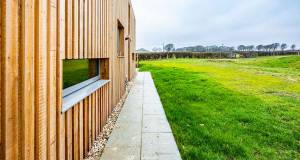
While this striking new larch-clad home in rural East Sussex ultimately received the backing of the local planners, there was just one catch: it had to meet the passive house standard before its owners could move in.
Site specific - Somerset passive house adapts to tight plot
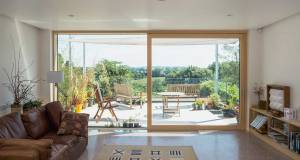
The best architecture responds skilfully and sensitively to its surroundings, so when a long and narrow plot beside a busy road became available in the Somerset village of Chew Magna, architect David Hayhow set out to design a passive house, inspired by nearby farm buildings, that would be both private yet filled with light — quite the challenge given the site’s tight restraints.
Woodland wonder
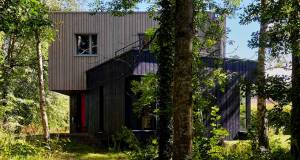
Hiding in woodland in an area of outstanding natural beauty, the Fishleys passive house manages to be both strikingly contemporary yet deeply sensitive to its rural setting. It also boasts a masterfully crafted timber frame structure with one of the best airtightness results this magazine has ever published.
Passive Wexford bungalow with a hint of the exotic
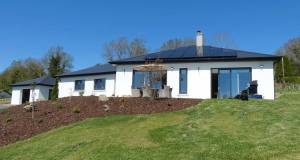
Appearances can be deceptive, and with his second A1-rated passive house in County Wexford, architect Zeno Winkens has designed a fairly traditional Irish home that also manages to include some unique design touches.
The UK's first green oak passive house
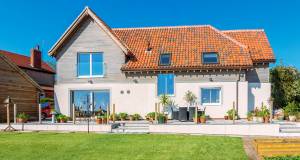
Choosing newly-harvested green oak — which shrinks and moves as it dries — for the millimetre-precise demands of passive house construction was a bold move by Phil Garnett and his wife Yvonne, but one that ultimately gave them one of the most unique and ground-breaking passive homes in the UK.