


Lenny Antonelli is deputy editor of Passive House Plus. He also writes regularly for the Irish Times, and has contributed to a variety of other publications including the Sunday Times, the CS Monitor, Village, the Sunday Tribune amd the Dubliner. He is currently working on a radio documentary on Ireland's oceans.
Floating Dutch neighbourhood are smart grids a good idea? why dismantle the planning act?
Here's a few interesting links for your reading pleasure. Have a good weekend everyone, and do leave your comments and feedback below.
Architecture that adapts to a changing climate: floating neighbourhood in the Netherlands Treehugger

Floating neighbourhood at Ijburg, Amsterdam. Photo by Michael Edwards.
Do smart grids increase energy use, endanger the environment and harm public health? Energy Bulletin
How big is the 2011 oil price shock, and what is the relationship between the oil price rises and economic downturn? Financial Times
Conflicting stories over whether the heating system was working in the home of young mother who died of hypothermia in Ballymun, Dublin Irish Times
Here's some nifty Tokyo apartments I'm linking to for no apparent reason: Flickr
Interesting blog post speculating on the "deaths per watt produced" of nuclear, oil and coal power: Seth Godin
When is removing a major road a good idea? Infrastructurist
New glass windows with integrated solar PV: Jetson Green
New York's first passive house: Jetson Green
British government accused of giving in to construction lobby and abandoning plan for zero carbon homes Guardian
Excellent blog post from Rob Kitchin from NUI Maynooth on Fine Gael-Labour's plans to review the planning act and potentially remove ministerial oversight of council planning decisions that were introduced by John Gormley. Kitchin writes: "A cynic would suggest that the new Ministerial powers were unpopular at the local level because they were used to stop councillors undertaking excessive zoning and giving inappropriate permissions (the result of which led to way too much zoned land and an excess of housing, offices, hotels and retail space). Local councillors and local TDs want such powers removed so they can get back to business as usual..." Ireland After Nama
Sustainable development vs historic preservation — a false dichotomy Treehugger
A look at public infrastructure bonds in the US — would something similar work here to help fund retrofit on a massive scale? Infrastructurist
Houses made from meat homes of the future off grid in the desert
Happy Monday everyone. Here's a few links that might be of interest:
Growing homes from plants, and, um, meat:
Putting a shower in the living room: has space saving architecture gone too far? Treehugger
Good hospital design has an impact on patient recovery, says the British Medical Association Treehugger
NUI Maynooth geographer Rob Kitchin reviews the aspects of the programme of government that relate to housing and planning Ireland after Nama
What will a typical home be like in the 2050s? Sustainable Cities Collective
A Glow in the Desert: profile of an off-grid desert house New York Times
Two stories about urban spaces in Ireland that you may have missed: Dublin City Council kicks green space to touch (Irish Times), and can Dublin follow New York's pedestrianisation lead? (Dublin Observer)
Commercial buildings must disclose their energy ratings (Guardian)
The new programme for government: good or bad for energy, buildings and the environment?
Most of the national media's focus on the new programme for government has naturally centred around Fine Gael and Labour's economic plans. But what does the document say about the government's policies on buildings, energy and the environment? I went through it this morning to pick out the highlights. There appear to be good intentions, but much of the language remains vague. That's par for the course with a document that has to be drawn up as quickly as this. We should start to hear more about specific policies in the coming months as new ministers are appointed and settle into their roles.
The new government says it will:
Energy efficiency in buildings
- double funding of home energy efficiency and renewable energy programmes (presumably the Home Energy Saving and Greener Homes schemes), but end them by 2014.
- introduce a 'pay as you save' scheme in 2014 to replace grants, allowing homeowners to pay for energy upgrades over time on their utility bills (Construct Ireland lobbied extensively for a scheme like this in 2009 and 2010)
- tender for a 'pay as you save' contract to insulate all public buildings
- move towards zero carbon homes "in the longer term" - what is meant by "zero carbon" and "longer term" is unclear. Will the new government keep the previous one's commitment to "zero carbon" new homes by 2013?
Energy
- establish Ireland as a "renewable manufacturing hub" and a "centre of excellence in the management of carbon" - exactly what these terms mean (particularly the latter) or how they will be achieved is not specified
- Merge Bora Na Mona with Coilte to create a new company called BioEnergy Ireland that will become a "global leader" in "next generation bioenergy technologies", and will plant 14,700 hectares of forestry annually
- publish a climate change bill to provide a "clear pathway for emissions reductions" in line with the EU's 2020 targets - this suggests the last government's climate change bill might be scrapped, as it was incorrectly perceived by the opposition to be tougher than the EU 2020 targets
- "legislate to support the geothermal energy sector"
- cluster new wind farms in areas with the best "wind regime" to reduce cost of connection to the grid - the idea here is for the government to plan the growth of wind farms rather than developers. But will this slow down the growth of the sector?
- aim to "maximise return to the Irish people" from offshore oil and gas reserves
- ensure that only the most "cost effective" projects are supported by the renewable energy feed in tariff, and set the tariff at a level "not significantly above" the all Ireland market price for electricity
Infrastructure
- accelerate capital works that are "shovel ready" and "labour intensive" - it's not clear what projects the government sees as meeting these criteria
- invest heavily, through semi state companies, in "next generation" infrastructure in energy, broadband, forestry and water over the next four years
- establish Irish Water, a new state company that will take over water investment and maintenance from local authorities
- create a new "smart grid" company with full ownership of Ireland's electricity and gas networks, following a handover of the ESB's "transmission assets" to Eirgird - is the removal of the network from ESB's remit a hint that the government is planning to privatise the company?
Other
- target up to €2 billion in sales from "non strategic state assets" - it's believed FG and Labour see Bord Gais and ESB as falling under this category
- "bring forward a coherent plan to resolve the problems associated with ghost estates" - no specifics are given
- commit to "urban regeneration to revitalise communities in areas such as Limerick" - again, the language remains vague
- require that the selling price of all dwellings is recorded on a public national house price database
- introduce a "mandatory compliance bond" to ensure construction waste is properly managed and recycled - I take this to mean that developers will have to pay a bond that will only be returned if they can demonstrate waste from a project was properly recycled or disposed of
- ratify the Aarhus Convention that gives the public access to information and participation in decision-making on environmental issues - green campaigners have been pushing for this one for a long time, but it was also in the 2007 programme for government and has yet to be fully implemented
- allow domestic turf cutting on 75 National Heritage Area sites subject to a "code of environmental practices"
- "re-balance transport policy in favour of public transport" - there are no specifics on the government's plans for public transport, however, except to establish a cabinet sub-committee on the issue and to support public bike schemes
- exempt farm diesel from further increases in the carbon tax
The Gypsy Junker
Here's structure — I can't really called it a house — that Derek Diedricksen built to prove "that you can built a semi viable shelter with nothing but crap".
[video:http://www.youtube.com/watch?v=LmR3kx660gw&feature=player_embedded 500x400]
Malahide tennis club

High levels of external insulation, abundant natural light and a minimalist approach to ventilation are ensuring that Malahide Lawn Tennis and Croquet Club is as green as its courts
Naturally Insulated Wicklow house sets airtightness standard
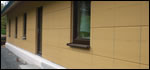
A new timber frame house in the Wicklow hills is arguably the most airtight building ever built in Ireland, boasting wood fibre external insulation and an obsessive attention to sealing
Parties commit to climate bill - ten materials to save the world - biodiversity thrives in New York
Here's our latest collection of links — let us know what you think.
All Irish political parties commit to passing climate change legislation Friends of the Earth (whether it will be any good or not is another question)
Right idea, wrong result: an insulation job gone wrong Green Building Advisor
Are venture capitalists investing less in energy efficiency? Wall Street Journal
Ten materials that could save the world (apparently) fastcodesign.com
Is New York City an ecological hotspot? New York Magazine
Anger at plans to build new houses on ghost estate Irish Examiner
This new apartment building in Chile looks stunning — but is it green? Treehugger
Just how green are green roofs (and shipping container architecture, and garden sheds)? Treehugger
RIAI publishes election wish list
- a reduction of Vat to 5% for of all energy upgrade repairs, maintenance and improvement works to private buildings
- speed up the roll out of approved capital projects, and fund these through "innovative" methods such as equity partnerships and build-to-lease schemes
- a site value tax to be introduced on "development land"
- prioritising investment in construction and infrastructure to restore the building sector to its "optimum" worth of €18bn per annum
- a "Plan for Ireland" to 2030 based on the principles of "sustainable communities, quality placemaking and environmental responsibility"
- a review of the National Spatial Strategy, and more integrated national, regional and local planning, along with a review of the planning system
- provision of public services such as health facilities, schools and transport networks to be based on "evidence based projections" of need rather than "crisis management"
- Nama lands to be used to create "sustainable urban neighborhoods" and for public infrastructure and services
- design quality, environmental impact and whole life-cycle cost to be considered ahead of price alone for government tenders
- a more flexible approach to unemployment benefit so those in the building industry can obtain part-time work and start businesses while still collecting benefit
Many of the manifesto's wishes are quite vague though, such as its call for "improvements to building regulatory procedures", and for unspecified "minimum design standards" for all publicly funded buildings. It also says the "theory and practice of sustainable development" should be at the heart of government policy on the built environment and public procurement.
Still, it's very welcome to see the RIAI offering a list of ideas ahead of the election. You can read a summary and download the document here. When it comes to the built environment, what would you like to see the next government prioritise?
Construct Ireland now on Facebook!
GB Shaw's rotating hut election policies on housing China plans megacity

Inside George Bernard Shaw's rotating writing hut
Linking you up with some green building and energy stories:
What could today's passive house designers learn from George Bernard Shaw's rotating hut? Treehugger
Is sustainable design wearing thin? Guardian
China to create world's largest mega city Infrastructurist
Can straw bales be used to insulate under a concrete slab? Green Building Advisor
Future housing supply in Ireland — for some interesting commentary from the Ireland After Nama blog about the Construction Industry Federation's call for new house building, see here and here.
As the election approaches, where are the parties' policies on housing and planning? Ireland After Nama
The Canadian ancestry of the passive house Treehugger
Profile of a passive house in Wisconsin Metro Hippie
Modern Rwandan education centre made with local materials Inhabitat