


Jeff Colley is the editor of Passive House Plus. He won the Green Leader award at the 2010 Green Awards for his advocacy work on the inclusion of energy ratings in property advertising, and a proposal to finance energy upgrades via utility bills.
He established Construct Ireland (for a sustainable future), Ireland's pioneering sustainable building magazine, in 2003. The magazine evolved into Passive House Plus in late 2012, the world's first English language magazine focused on passive house, as well as other aspects of sustainable building.
He is also a founder of Éasca, (the Environmental and Sustainable Construction Association) , an organisation set up to develop and promote a membership of approved companies offering genuinely sustainable solutions.
He writes a regular column for the Sunday Times, and has authored, co-authored and contributed to articles on sustainable building for numerous newspapers including the Irish Times, The Sunday Business Post, the Irish Examiner & the Sunday Tribune.
Heat pump grants - what you need to know
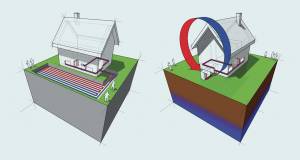
As of 16 April, owners of pre 2011 Irish homes are now eligible for generous grants to retrofit heat pumps, and in so doing help to create comfortable, economical, low carbon homes. But what’s the thinking behind the scheme, and what results can participating homeowners expect?
Analysis: 12,000+ homes built in 2017 – as energy standards marginally fall
In excess of 12,000 homes may have been built in Ireland last year, new analysis by Passive House Plus has revealed – with a marginal decline in energy performance evident as housing activity increases.
New homes data reveals extent of Irish low energy revolution
Ireland’s new build housing market is undergoing a radical transformation in energy performance specifications, analysis by Passive House Plus has revealed — with oil heating all but vanishing from use, leaving gas boilers and heat pumps to dominate the heating market.
Ireland’s largest passive house scheme shows way to nZEB
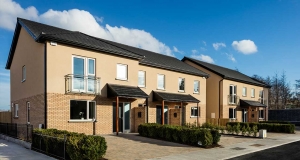
At a time when the industry’s under increasing pressure to deliver cost-effective, robust, low energy homes at breakneck speed, one new west Dublin project is leading the way – while picking off sustainability targets for fun.
Zero Hour: Industry out of time on profound imminent NZEB changes

The construction industry is unwittingly facing the prospect of immediate, dramatic changes to how buildings are designed and constructed to comply with imminent EU energy efficiency deadlines. In the first article in our new Dispatches section – where we’ll attempt to probe and investigate in detail the burning issues arising from Ireland’s transition to sustainable building – Passive House Plus investigates.
Words: Jeff Colley & Lenny Antonelli
Why Dublin City’s passive house policy must be retained
The attempts to derail Dublin City Council’s proposed ‘passive house or equivalent’ planning requirement are bad news in the increasingly difficult fight to mitigate against and adapt to climate change – they risk being complicit in new buildings in the city breaching European law.
Passive house or equivalent - The meaning behind a ground-breaking policy
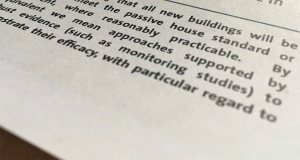
Dún Laoghaire-Rathdown’s passive house policy also leaves the door open for alternative approaches, provided their equivalence can be demonstrated. But what does this mean?
Market demand for sustainable homes massively underestimated - UK survey
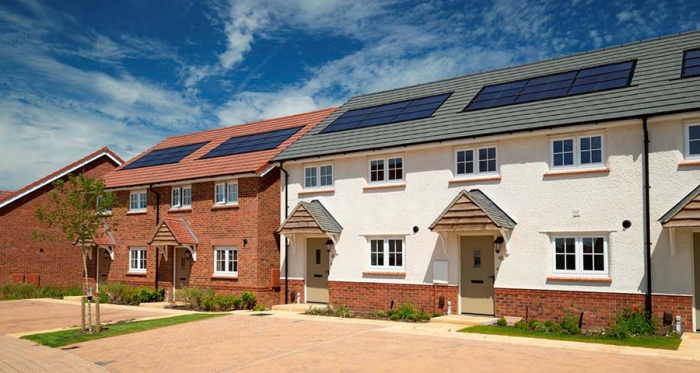
The long-held claim that customer demand for purchasing sustainable homes is limited has been challenged in new research by UK housebuilder Redrow.
Dublin local authority makes passive house mandatory in historic vote
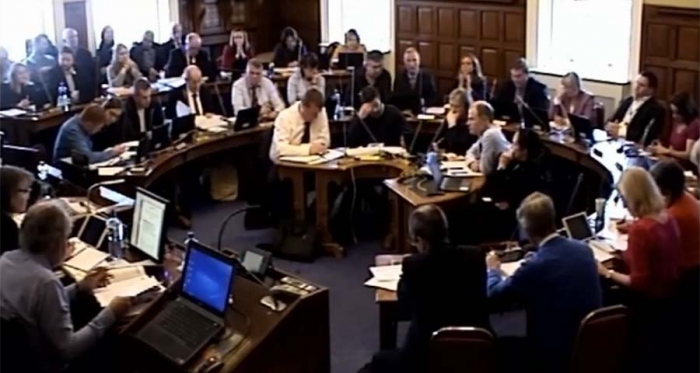
All new buildings in south-east Dublin must be built to the passive house standard or demonstrably equivalent levels, in a move that may lead to the construction of upwards of 20,000 passive houses by 2022.
Passive House Plus back issues now freely available online
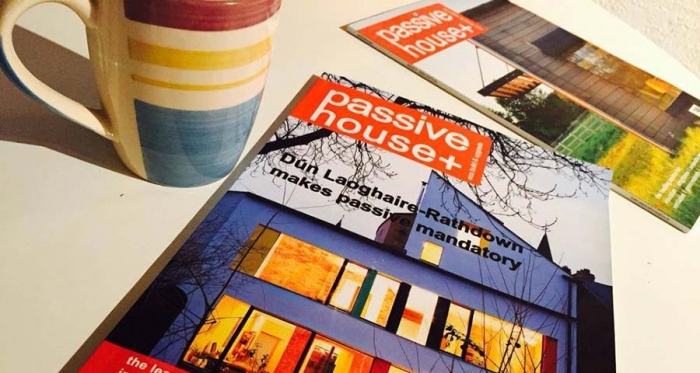
The digital versions of all previous issues of Passive House Plus are now freely available online. The magazine is available in entirety in digital form, while many of the feature articles are also now available in HTML form - or in other words as regular web articles. The digital editions use the Issuu pageflipper software, which was chosen for its functionality, simplicity and the ability for readers to interact with magazine content - for instance by sharing links to articles in the magazine via social media or email, or by clicking links to websites contained in articles and adverts.