


Off grid living, part five effluent disposal
This is the last in a series of blog posts by the architect Mark Stephens on going off grid. The full series can be found here.

A flooded percolation area is a serious health hazard
Welcome to this final blog post on living off gird, which focuses on the safe disposal of any wastewater from a house not connected to a public sewer.
This topic is probably the one that Ireland has the most experience with (both good and bad), due to the lack of sewerage infrastructure once you leave the main towns and cities. There are currently around 500,000 on-site wastewater treatment systems in Ireland, and many are believed to be contributing to groundwater pollution due to poor design, maintenance and lack of regulation over the years. The EU recently ruled against Ireland for this, and the mandatory inspection of such systems is expected to start within the next year.
This is also the one topic that will cause the most problems if you are looking for planning permission on a new house or more particularly the renovation of a ruin or abandoned house.
So let’s have a little look at the history of effluent disposal in modern times.
Septic tanks
The traditional septic tank would have been a concrete single chamber system — the outlet would have simply been piped out into a ditch that drained into the next field.
One problem arising with these systems is that frequently the farmer working the field would fill in the ditch, causing the effluent to start backing up. Then you could find yourself standing in a field slowly submerging in crap (this has happened to me on numerous occasions). A system like this also provides little treatment of effluent.
An article by Lenny Antonelli in issue twelve, volume four of Construct Ireland discusses precisely this problem and the bacterial ha�zards that are created.
The next stage on from a single-chamber septic tank was the dual chamber (again constructed in concrete). This system allows the solids to settle, with the second chamber taking the overflow which then exits the tank in a similar way. The same problem described above will also occur if the overflow effluent isn’t treated correctly. It’s therefore essential that a proper percolation or polishing filter system is designed and constructed within the curtilage of your own site.
Proprietary effluent treatment systems
A proprietary effluent treatment system utilises some form of aeration or mechanical purification/digestion before the wastewater exits the system. If properly designed for your site conditions, these systems can treat the effluent to a high standard, but consideration must still be given to what happens to wastewater when it enters the field. Most of these systems will require an electricity supply, which will add to your energy usage (and some may say goes against the off-grid ethos). One advantage of such systems is that it is possible to test and verify the quality of the effluent as most of the treatment is done in the unit itself, whereas with septic tanks more of the treatment takes places in the soil itself, making testing of final effluent difficult for these systems.
Composting toilets, reed bed systems etc
The principle of the composting toilet is straightforward — the solid waste goes into a separate section to the liquids, and the solids then dry and become first-class manure for the land. To create this compost requires a bit of time away from human contact which thereby breaks the cycle of the pathogens. Another option is rapid hot composting where usually sawdust or straw is added in order to kill all the known pathogens to humans in hours. But it will typically take about six months for compost to be available in dry conditions, longer if it is outdoors in a damp location.
Another popular way of percolating any waste in the ground is via a reed bed system, which is a natural solution that works ideally on a site with a fall where any effluent trickling through the reed bed is cleaned by micro-organisms living on the root system. Micro-organisms here break down the sewage in the presence of oxygen (ie aerobically). Your site will need to be physically suitable for a reed bed, and you may have difficulty convincing the planners that your system will work.
Planning
Any new effluent treatment system, either for a new house or a renovation will require planning permission. It is often thought that because a house was previously on the site (say for example, a wreck with no septic tank) you will have a better chance of obtaining planning permission. But I have seen many a dream quashed when planning is refused because the ground on site wasn’t suitable. The rules may be relaxed a little if the house already has a septic tank - a proposed upgrade may be acceptable if it improves treatment even if it doesn’t exactly meet the Environmental Protection Agency's Code of Practice. But you will find it harder to convince planners about any new system that falls outside the remit of the EPA Code of Practice.
If you're looking to install a new effluent treatment system for your new build or renovation project, start by contacting an experienced engineer or similar professional who can advise on the most appropriate system design for your site.
So that’s it, my take and discussion for living off-grid. With the country currently in economic turmoil, maybe living a simpler life not connected to electricity, water, sewerage etc doesn’t seem too mad cap after all.
Special thanks again to Nick Rosen's book How to Live Off-Grid.
Mark Stephens
ARB RIBA MRIAI is a UK and Ireland registered and chartered architect specialising in sustainable, unique designs.
Off grid living, part four water & food
This is the fourth in a series of blog posts by the architect Mark Stephens on going off grid. The full series can be found here.
As we’re approaching the end of my guest blog posts, it’s lucky that the last two topics are probably the easiest for Ireland to handle — this post on how to get water and food, and the final blog post on the safe disposal of effluent. The reason these two are the easiest for Ireland to manage is due to effectively the complete lack of water delivery infrastructure once you get outside the major cities and towns.
Water
Let’s therefore deal with how we get water to our site, using a rural house as an example. The previous articles have dealt with shelter and providing heat and power. As long as you have the means to make a fire and put a cover over your head you can live pretty much anywhere, but it’s essential that you have a source of water in order to survive. The requirement for water divides neatly into two areas: the water to drink and the water to cook and wash with. So let’s look at ways you can obtain water from your site without being connected to a mains water supply. We’ll firstly discuss how you obtain your own source of water.
Wells & Boreholes
A new-traditional type of well is quite expensive to construct; instead a borehole is drilled to obtain water at a much smaller diameter. Normally about 150-300mm in diameter and drilled down to at least 50m, the resulting hole is lined with a steel or plastic tube and has a pump at the surface to pressurise the water into your house.
With so many variables (land, contours, geology etc) it’s difficult to give exact costs without one of the specialist firms that conduct the drilling visiting the site. A very approximate cost is somewhere in the region of €3000 to 6000.
Springs
A spring is water that percolates through porous earth until it reaches an impervious layer on which it collects. If the water bed is U-shaped then water is forced up resulting in a gush or trickle.
Streams and rivers
It is possible to obtain water directly from a stream or river, but there’s no guarantee of its cleanliness (which I will discuss in a moment). However, I have completed a few planning applications for new houses where the water is obtained from a stream.
In order for your water to be drinkable (or 'potable') then it will need to meet European safety standards; it is therefore essential for all of the methods described above to have a sample of your water tested and if required, to fit a purification system to purify the water further. Some councils in fact insist upon this sample water test as part of a planning application.
Let’s not discount one of the biggest sources of water available — rain. If they were careful, two adults and two children could theoretically manage for water solely on collected rainwater. What all of us can do however is implement a rainwater harvesting system, even if it’s only a basic collection system such as a water storage butt which can then be used for greywater in the house (flushing toilets etc) A more sophisticated system (ie a full rainwater harvesting system) could involve large underground storage tanks, physical and ultraviolet filters and delivery pumps / pipes. With water charges rising and metered costs likely to be introduced, some form of rainwater management is essential.
Food
So we have got water into our off-grid house, the next aspect in survival is providing enough food to survive. According to the excellent website A Self Sufficient Life http://www.aselfsufficientlife.com, approximately sixty square meters is enough land to feed a family of four for the year. As someone who’s dabbled in growing his own vegetables, it’s important to point out that a) It’s bloody hard work and b) it takes a lot of time. There is however nothing that replaces the taste of your own veg.
As well as growing vegetables, fruit, herbs etc. it is also possible for you to keep animals for milk and meat. It’s not impossible to keep a single cow or a few pigs, sheep or goats on a small piece of land, but as seen in the incredible upsurge in poultry sales, there are many people now keeping hens for eggs (myself included). A small group of hens (say six to ten) will constantly keep a family in eggs with a few to spare. Don’t forget that ducks and geese can also be kept for eggs and slaughter; interestingly the profitable life of a goose is six times as long as that of a chicken. Also, don’t forget that you could even keep a few hives of bees for honey.
When you have sown your seeds, tended your crops and reaped your vegetables, the key steps are that you should firstly eat seasonal food and then preserve and store food for eating later. There are stacks of books available on salting, drying, smoking, bottling and potting your meat, vegetables and fruit. And if the thought of becoming self-sufficient is turning you off then don’t forget that you could even brew your own wine, beer or cider from apples grown on your land.
The next and concluding article will deal with how to dispose of the effluent that you and your family produces, another area that Ireland has had to become self-sufficient in due to the lack of sewage infrastructure when you venture outside cities and towns. I’ll also be discussing the problems associated with every household pumping out their own effluent into the Irish countryside in poorly designed and constructed septic tanks.
Off grid living, part three power
This is the third in a series of blog posts by the architect Mark Stephens on going off grid. The first post was a general introduction to the series, while the second focused on the building envelope.
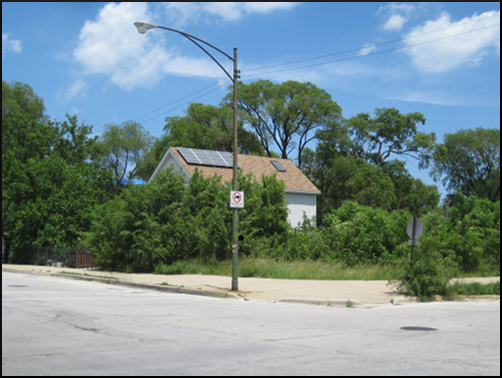
Photovoltaic (PV) panels can convert sunlight directly into electricity and are a well established way of generating off-grid power. Photo by Charlie Vinz.
The next requirement after we’ve found a suitable place to live off-grid is to provide power; we’ve already introduced the concept of going passive as a way forward in order to have minimal heat demand, but we will still need to provide power to lighting and other electrical appliances.
We can divide our power demand into two areas: 1) power for lighting/electrical items and 2) power for hot water and heating
Power for lighting/electrical items
We therefore need to generate our electricity through a self-contained, renewable method — this leaves us with three options:
Wind
The concept of micro-wind generators is well established to generate electricity; the problem is that to power a serious amount of power requires a pretty big wind turbine. But the thrust of this blog post is being more aware of our electricity consumption — we will be relying less on electrical/electronic gadgets and getting back to a more simpler life where when it gets cold we add another sweater rather than increasing the heating an extra degree. Another problem is that wind turbines are notoriously temperamental over where they are located — they won’t work as effectively in built-up urban areas and even in rural locations they require minimal obstructions that cause fluctuations and disturbances in wind speed.
Water
Again the concept of a water or hydro turbine is well established; obviously they key thing here is that you need to be next to either a fast flowing stream/river or have access to a large drop on a large body of water (head) in order to turn the hydro turbine. You will obviously need to ensure that you have a legal right to use the water.
Solar
Photovoltaic (PV) panels can convert sunlight directly into electricity and are again a well established (if costly) way of generating off-grid power. Continuing the theme of reducing our electricity consumption you can obtain a small solar panel kit that provides 150 Watts of power; the key then is to run low voltage LED lights to provide your lighting. In order to power larger items such as a standard TV that work off 240V you will need an inverter.
With all of these technologies you will come unstuck if a. there’s no wind b. the water runs dry in summer and c. there’s no sun! To get round this problem you will need a bank of batteries to store the electricity you’ve generated. The batteries will need to be quite large and ‘off-gridders’ recommend the use of submarine batteries that can store and release enough electricity for a small home. Some ‘off-gridders’ use the PV panels to charge the standard AA rechargeable batteries that are then used in LED head lamps so that you can move around after sunset without bumping into things.
Power for hot water and heating
The next form of power we will require is to provide heat for cooking, heating and hot water. As discussed, by following passive house principles we will drastically reduce our space heating requirement — a certified passive house will require less than 15 kWh/m2/yr — but we will still require hot water for showers, washing etc. A solar collector (evacuated tube or flat plate collectors for example) can provide a large percentage of your hot water requirements (60-75%), the problem occurs obviously when there is less sun during the winter months and hot water is still required. The unfortunate reality is that something will still have to be burnt in order to fulfil this shortfall. A well installed and efficient wood pellet burning stove can provide hot water and heating but the more obvious example would be a simple wood burning stove with a back boiler that can provide heating to radiators, hot water and a method of cooking food. The only draw-back is that the fire needs to be lit whenever hot water is required. Again, we need a drastic rethinking over how we live our lives and to readjust to not having a source of constant hot water. It is important to note that although wood doesn’t provide as much energy as oil or gas for example when burned (therefore you will need more of it), the CO2 emissions are over 10 x better (0.025Kg CO2 per kWh for wood compared to 0.272 CO2 per kWh for oil). The obvious place therefore to be placed to be self sufficient in wood is next to a sustainable, managed forest as Ben Law did in the Woodsman’s Cottage episode of Grand Designs.
The next guest blog post takes us onto how we become more self sufficient in terms of water and food.
As always, comments welcome.
Mark Stephens RIBA MRIAI is a UK and Ireland trained chartered architect, based in Foxford, County Mayo, Ireland. He specialises in one-off, residential houses, extensions, restorations and refurbishments. His slant is a modernist approach using traditional forms and materials; his work also combines a contemporary architecture with an ecological and sustainable soundness.
Off grid living, part two building envelope
This is the second in a series of blog posts by the architect Mark Stephens on taking a traditional Irish cottage off grid. The first post is here.
OK, so here's the first main blog post - where are we going to do it? I'm going to concentrate on an actual built structure rather than the other forms of off-grid living such as yurts, camper vans etc which are discussed in Nick Rosen's excellent book How to Live Off-Grid .
The first form of structure I'll be looking at is the derelict, traditional small cottage which would have been prevalent across the whole of Ireland, though most are now are disintegrating through decay because of exposure to the elements.
There are two stages in making such a structure habitable before we even consider how we then get that dwelling off-grid:
1. Increasing the size. Although we don't want to return to the McMansion sizes of the Celtic Tiger days, we will still need to increase the floor area to make it a more practicable solution for the family of today. Normally the biggest 'traditional cottage' size would have been a single room either side of a communal eating, living/sleeping space. So unless you are a very small family you will need to increase the house by at least another bedroom, and frequently these derelict cottages were without bathrooms, so a new bathroom will also need to be included.
Some older cottages would have been even smaller — I am currently restoring two cottages that were just single rooms where entire families were raised!
I'm not going to discuss here the problems associated with planning for converting properties of this type into habitable dwellings; for more details on this visit my website .
2. Upgrading the buildings fabric to a current standard.
The standard I would suggest trying to achieve is the passive house standard, devised by the Passive House Institute in Germany. Again going into depth on this standard is beyond the scope of this blog post but we can have a look at typical insulation standards that will need to be achieved in order to get close.
The roof should be the most straightforward area as typically the roof will have to be reconstructed anew with new rafters, slates etc. This is generally because the increased weight of slating the roof (frequently the roof would have been metal sheeting that would have replaced thatch) requires the rafters to be increased in size; larger sections of timber would have been impossible to obtain when the house was originally constructed.
This means that we can create a roof with the desired level of insulation. The u-value for a certified passive house is less than 0.15 W/(m2K), which could be achieved with a warm-roof construction with sufficient insulation between the rafters, and then further insulation under them to prevent cold bridging. The amount of insulation needed will vary depending on the type used.
The walls of the cottage will be more problematic. A typical U-value for a 2' stone wall is over 2 W/m2K; to achieve 0.15W/m2K will require a rendered external insulation of around 200mm of EPS (expanded polystyrene). The good news is that cottages of this type would have been normally been rendered with a lime render and white lime wash which is not a million miles from a modern white, mono-couche external render.
As well as calculating the U-values you should also take care to avoid the risk of condensation; the correct way to do this is with a dew point graph which graphically shows the area in any construction build-up where condensation can occur. A condensation analysis can be carried out using simulation software such as WUFI, which is based on EN 15026, a European standard for simulating condensation risk.
Any new structure that extends the existing cottage will be easier to insulate to a high standard as we are constructing anew as per the roof.
The next logical step in thinking is to jump from the derelict cottages that are dotted throughout the country to the derelict houses in the ghost estates throughout every county. Theoretically they should be easier to upgrade to a better standard than the older cottages but their poor location and lack of infrastructure will remain an issue.
So, we have somewhere to live in to conduct our off-grid experiment — the next step is obtaining heat and power to the house. Trying to obtain passive house standards will drastically reduce the heat requirement for the house but it will not eliminate it entirely. The next blog post therefore will address this key aspect of off-grid living.
Off grid living, part one - introduction
The architect Mark Stephens begins a series of guest blog posts on going off grid
Welcome to this first in a series of guest blog posts that came about following the many enquiries and questions I receive as part of my everyday work and through the Ask the Architect service. This particular question came from Sylas Harper with the basic premise being that people haven’t got much money at the moment but they still need somewhere to live, and that throughout the country there are derelict houses that could be turned into homes. What I’m talking about here is living off-grid — a home that is not connected to mains electricity, water, gas or sewage. A home that is self-sufficient, sustainable and lowers the demands placed upon the planet. Once the enclave of the hippy or the hermit; the concepts behind living off-grid are now completely mainstream; solar panels and wind turbines are now commonplace and it is essential that we look for ways to lower our carbon dioxide emissions and to live a more sustainable life. As a theoretical experiment it may not be possible to adopt all of the points I’ll raise, but some of the aspects could be adopted by anyone seeking a more ecologically aware existence.
Now the initial question was posed thinking of the traditional Irish cottage wrecks dotted throughout the country, but with the recent news on the ghost estates throughout Ireland I came to the opinion that these ghost estates are the modern day equivalent of the derelict homes left to rot and be visible for generations to come. Surely there’s some way of getting ghost estates back into the hands of the ones that should be owning them - ie the people - especially now that all these homes are now effectively owned by the Irish tax payer via Nama. The Irish cottage concept is equally valid, and the points raised in these guest blog posts will equally apply to all types of housing.
Maybe it’s too big a jump to ask to get these ghost estates occupied and in-use? The argument could be made that living off-grid is possible for a sole dwelling but for an entire community of people? Well, Nick Rosen in his excellent book How to Live Off-Grid (ISBN:978-0-553-81819-2) discusses thoroughly the arguments and concepts for off-grid living and through his off-grid journey meets individuals and entire communities living beyond the constraint of national services. I cannot recommend this book highly enough — if you’re interested in off-grid living in any way, buy it now!
So what are we talking about here? We basically have four facets to living off-grid:
1. WHERE
We need somewhere to do it; that is an enclosure that gives us protection and shelter from the elements; a defendable space that we can call our own - a private space to retreat to and a public space to interact with others.
This will be the argument behind the first main blog post — I’ll be looking at what you will need to look for to provide your ideal off-grid dwelling. This blog post will also incorporate passive house concepts; a dwelling adhering to passive house concepts (airtightness, high levels of insulation etc) will obviously require less energy to heat than a more conventional house.
2. POWER
We will need to provide power to the houses without relying on the national grid. It’s too much to ask people to live in houses powered by candles, to go to bed as soon as it gets dark or wander around your house with LED lamps strapped to the head. The dwellings will need to be powered in a reliable yet sustainable way.
Therefore, the concept of this second blog post will be investigating methods of providing enough energy to adequately provide light and heat to the house and providing hot water for baths and showers.
3. WATER & FOOD
Each dwelling will also require a potable water supply, and the third blog post will investigate what will be required to bring water to a site with no discernible, potable water supply. I will be looking at methods of extracting water from the ground (wells) and water harvesting/purification to provide water for drinking as well as the ‘grey’ water for flushing toilets etc. I’ll also be taking a little detour to see how any land associated with the dwelling (or even communal land) can be used to grow vegetables/fruit and again contribute to a more sustainable and self-sufficient life.
4. EFFLUENT
Each dwelling will need to safely dispose of its effluent; this will probably be the biggest problem (as evidenced by the current strict
standards regarding obtaining planning permissions involving a new septic tank). But equally this theoretically should be the easiest problem to solve as Ireland doesn’t have a national sewage infrastructure and the use of individual septic tanks and effluent treatment units is well established (ground conditions permitting). I’ll also be looking at composting toilets and reed bed systems.
The plan is to do one of these guest blog posts every week, so hold onto your hats for an interesting ride and a theoretical experiment in off-grid living with the first blog-post looking at where we are going to do it.
Comments welcome.
Mark Stephens RIBA MRIAI is a UK and Ireland trained chartered architect, based in Foxford, County Mayo, Ireland. He specialises in one-off, residential houses, extensions, restorations and refurbishments. His slant is a modernist approach using traditional forms and materials; his work also combines a contemporary architecture with an ecological and sustainable soundness.