

Via Treehugger, architect Cameron Sinclair writes in the Huffington Post :
For the past twenty years the voice of the architecture profession has mainly been drowned out by the computer generated sky-piercing towers of luxury. Year after year the biggest names in architecture tried to out do each other in what is technically feasible...This constant craving to create jewels of desire in the urban fabric left the general public wondering what on earth we do. Now, with the global economy in tailspin, these exercises in object making have come to a crashing halt. For many of us, we couldn't be more thankful...For those of us that work in this arena we are being swamped with requests for help from the camps in the eastern Congo to the hoovervilles in southern California. The desire for well built, sustainable structures is immense and young professionals seeking meaning are finding themselves drawn to providing their expertise to these communities. There is immense opportunity for architects to work in the service of humanity rather awkwardly trying to define it or worse impose a solution on it.
The Japanese government is to spend 15 trillion yen (£100bn, or as I prefer to write it to really let it sink in, £102,000,000,000) on an economic stimulus package focused on green technologies such as electric cars, solar panels and energy saving building materials, according to an article
TreeHugger has posted an interesting slideshow on the best in green design and architecture, including Edouard Francois & Duncan Lewis designed French holidays homes (below) that are designed to fit seemlessly into the surrounding environment, and the green roof on the California Academy of Sciences (bottom).
A quick look through the summary of today's budget measures at budget.gov.ie reveals the following under the list of capital expenditure measures:
Communications, Energy & Natural Resources – €15 million savings, including a reduction of €13 million in the allocation for Sustainable Energy and Energy research programmes.
Empire State Building to get low carbon makeover
Written by Lenny Antonelli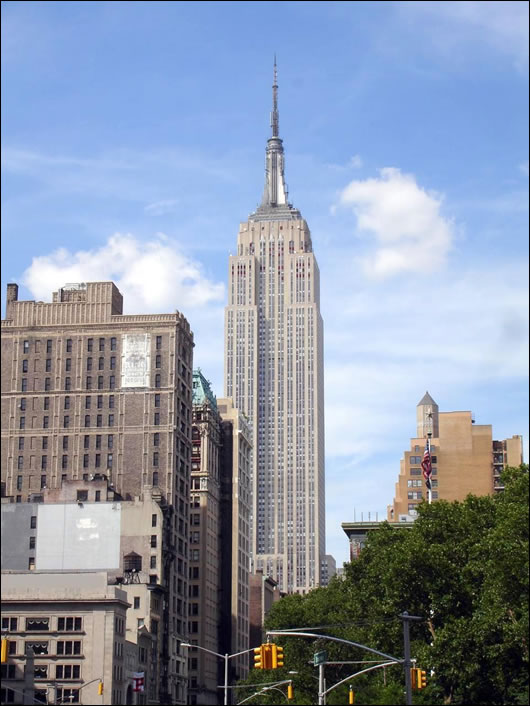
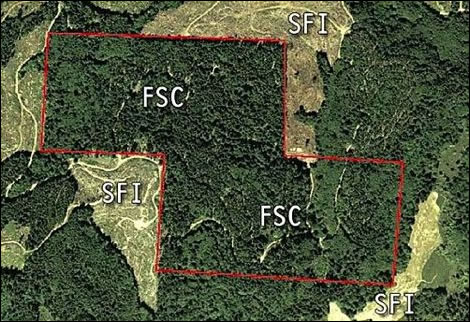
Forestry Stewardship Council vs Sustainable Forestry Initiative
Written by Lenny AntonelliAn interesting discussion on TreeHugger on the merits of various forestry certification programs, including the below photo (courtesy of Heart of Green) that apparently shows both FSC (Forestry Stewarship Council) and SFI (Sustainable Forestry Initiative) certified forests.
Boosting biodiversity in the built environment
Written by Lenny Antonelli
A new report from the UK's Green Building Council has recommended a variety of steps that builders, planners and architects can take to enhance biodiversity in the built environment. Among the recommended design features are:
- Nesting bricks built into cavity walls for birds such as swifts and starlings
- Ledges on high buildings that mimic cliff faces for peregrine falcons and other birds of prey
- Careful lighting and roosting boxes under bridges to allow bats to inhabit areas that are usually too bright
- Green roof and walls (explored at length in Construct Ireland last year)
Green ideas shortlisted by the Sustainable Development Commission
Written by Lenny Antonelli
A quick glance through the ideas short-listed in the UK Sustainable Development Commission's 'Breakthrough Ideas' competition reveals a few concepts that have previously been discussed in depth in Construct Ireland.
An interesting debate has broken out on the Guardian's Comment is Free site over the pros and cons of using charcoal as a means of sequestering carbon, an idea discussed in Construct Ireland by Richard Douthwaite in 2007.
Pelamis wave project runs into financial difficulties
Written by Lenny AntonelliAccording to today's Guardian , the pioneering Pelamis wave energy project off the coast of Portugal is in trouble after the collapse of majority shareholder Babcock & Brown. The company went in to voluntary administration last week, and its 77 per cent stake in the Pelamis projectis now up for sale.
A few interesting stories on ScienceDaily today that touch on the costs of both solar thermal and solar PV technologies.
Google to launch free home energy monitoring software
Written by Lenny AntonelliGoogle will soon launch free software that allows consumers to track their energy use at home and improve efficiency, according to the Independent of London.
The company is currently in talks with energy utilities worldwide. The program, which will be open-source, is expected to show energy consumption in real time on consumers' computers or mobile phones.
Here's a simple and effective idea, courtesy of TreeHugger. Toronto based green retrofit specialists Greening Homes put signs like this in the front garden of houses the company is renovating. As well as providing free advertising for the firm, the sign lets everyone passing by know what kind of work is being done, and encourages neighbours to consider green refurb too.

Looking at the national situation, the Times reports that the EPA will today announce a dramatic reduction in greenhouse gas emissions associated with the economic downturn.
While it is one of the most ecological building materials around, rammed earth - a mixture of earth, sand, gravel and clay - is usually associated with buildings with an earthy, less-than-modern aesthetic. A new house in Vorarlberg, Austria, could change that.
