From the Construct Ireland archives
Welcome to the archive of Construct Ireland, the award-winning Irish green building magazine which spawned Passive House Plus.
The feature articles in these archives span from 2003 to 2011, including case studies on hundreds of Irish sustainable buildings and dozens of investigative pieces on everything from green design and building methods, to the economic arguments for low energy construction.
While these articles appeared in an Irish publication, the vast majority of the content is relevant to our new audience in the UK and further afield. That said, readers from some regions should take care when reading some of the design advice - lots of south facing glazing in New Zealand may not be the wisest choice, for instance.
Dip in, and enjoy!
Coillte Teoranta
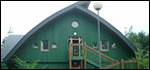
The building is the first all timber office complex in Ireland. It covers almost 2,300m2 of floor space and provides accommodation for almost 100 staff working in a wide range of forestry related disciplines.
Breaking the mould - part II
The previous edition of Construct Ireland featured an article by leading green architect Joseph Little analysing the insulated dry-lined blockwork walls typical of many homes in Irish housing estates, looking particularly at moisture movement within the external walls. Continuing on from that article, Little looks at the implications of several ways of insulating houses of hollow block construction.
Good form

If you are at all worried about keeping construction costs down and lengthening the useable lifespan of your building, it’s critical that energy performance is considered from the earliest stages of planning and design. John Hearne spoke to a number of leading Irish experts in sustainable design about following simple principles of orientation, form and layout to achieve substantial energy improvements for free
Stonebrokers
Planning for the Future

A marked lack of adequate central government action to promote sustainable house building in Ireland has been recently counteracted by planning authorities such as Fingal County Council taking action into their own hands, and setting standards geared to protect their constituents in an oil and gas scarce future. However, as sustainable building consultant Will Woodrow discovered from surveying planning authorities around the country, local government willingness is not always met with a full grasp of the issues needed to make sustainable housing happen.
A Lesson in Energy Efficiency

The Department of Education has made its commitment to energy efficiency and CO2 reduction clear in developing and bringing into practice targets for primary school design that aim for less than half of the accepted good practice in the field. Project coordinator John Dolan, Senior Engineer with the Department of Education explains how this approach works within normal Departmental budgetary limits to create school buildings that show the way ahead for building designers.
Ghost estates
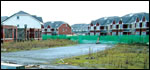
Due to the ill-considered productivity of the house building industry towards the tail end of the economic boom, Ireland is now saddled with hundreds of thousands of vacant homes in various states of completion. Structural engineer Sadhbh Ní Hógáin, currently writing her thesis for a masters architectural degree in advanced environmental and energy studies at the Centre for Alternative Technology, looks at the options Ireland has to address the problem.
Thinking Caps

Much of the debate on reducing international carbon emissions has focused on the extra cost of making the necessary cuts to slow the onset of climate change. According to Richard Douthwaite, the Irish Government is considering introducing Cap and Share, a system which would actually earn ordinary Irish people money for reducing emissions.
Safe as Houses

Conventional wisdom dictates that higher construction costs — for instance to reduce energy consumption and carbon emissions — would either squeeze developers’ profit margins or increase house prices. Tom Dunne, Head of DIT’s School of Real Estate and Construction Economics, reveals how misguided this view could be...