Energy minister Eamon Ryan TD today announced a new grant scheme which
will provide financial support for the construction of highly energy
efficient, low carbon housing.
The Low Carbon Homes Programme, which will be administered by
Sustainable Energy Ireland, will provide grants of up to 40% of
eligible expenditure to encourage large developments of new homes to an
energy performance standard well in excess of the recently adopted
building Regulations. Homes built under the programme will be at least
70 per cent more energy efficient and produce at least 70 per cent less
carbon dioxide than homes built to 2005 standards and will have a
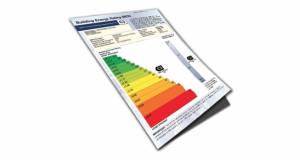
Building Energy Rating (BER) of at least A2. Homes build to the
standard of the recently adopted Building Regulations, would typically
have a BER of B1, two points below the minimum standard of the new
programme.
With a capital envelope of €9 million until the end of 2011, the Scheme
will seek to achieve zero or very low carbon emissions from supported
homes by requiring a significant element of auto-generation of
electricity from renewable technologies such as solar photovoltaic,
micro-wind and micro combined heat and power (CHP). The programme will
demonstrate the efficiencies that can be achieved with low carbon
housing, and will also form an evidence-base for future policy
decisions in the area.
In 2007, Building Regulations were amended to establish mandatory
higher energy efficiency and emissions standards which are 40% better
than the 2005 Building Regulations and it has been proposed that this
will be increased to 60% in 2010. This planned revision in 2010 will
typically bring new homes up to a Building Energy Rating of A3. This
new programme will prepare the building industry to move beyond that to
A2 and even A1 homes.
Speaking as he launched the programme, Minister Ryan stated: ‘The
recently adopted Building Regulations have placed Ireland among the
best in Europe in terms of energy efficient new housing. However, the
threat of climate change and the impacts of rising oil, gas and
electricity prices mean that we must aim for the very highest
efficiency standards possible, while tackling the carbon emissions from
our electricity use in the home.
These will be houses where energy waste is minimised and where heat is
produced and electricity generated on site. This is the housing of the
future.’
The programme will comprise capital grants to developers for eligible
works. Supported homes will maximise solar heat gain, minimise heat
loss through insulation and ventilation control, maximise heat recovery
and will apply electricity demand management technologies including
smart metering.
According to the department heating will be provided using renewable
energy technologies including solar hot water and pellet fuel stoves
for space and hot water heat production.
Homes will generate their own electricity using photovolatics, micro
wind, hydro power or combined heat and power. There will be a
requirement that deployed technologies be appropriate to their location.
The following minimum eligibility criteria will apply to supported homes:
· A Building Energy Rating (BER) of A2 or better for each unit in the project
· An energy performance coefficient less than 0.25
· A carbon dioxide performance coefficient less than 0.30
· Generate electricity onsite (for supply or export) to the equivalent of 10 kWh/m2/yr or greater per unit
Tuesday, 22 July 2008 14:31
Minister Ryan launches Low Carbon Homes Programme
Written by Jeff Colley
€9m for developers of A2 rated housing
Published in
Government

Jeff Colley
Jeff Colley is the editor of Passive House Plus. He won the Green Leader award at the 2010 Green Awards for his advocacy work on the inclusion of energy ratings in property advertising, and a proposal to finance energy upgrades via utility bills.
He established Construct Ireland (for a sustainable future), Ireland's pioneering sustainable building magazine, in 2003. The magazine evolved into Passive House Plus in late 2012, the world's first English language magazine focused on passive house, as well as other aspects of sustainable building.
He is also a founder of Éasca, (the Environmental and Sustainable Construction Association) , an organisation set up to develop and promote a membership of approved companies offering genuinely sustainable solutions.
He writes a regular column for the Sunday Times, and has authored, co-authored and contributed to articles on sustainable building for numerous newspapers including the Irish Times, The Sunday Business Post, the Irish Examiner & the Sunday Tribune.
passivehouseplus.ieRelated items
-
Wales unveils net zero pattern book
-
Chartered Institute of Building urges VAT overhaul to encourage reuse and renovation
- WorldGBC launches green building policy principles for governments
-
Climate action plan sets embodied carbon targets for construction
-
BERCerts.ie offering ventilation validation
-
New drive to cut VAT on MVHR systems