

Displaying items by tag: UK blogs
Is procurement stifling natural building materials?

Is the very nature of the way that construction products are bought and sold limiting the wider proliferation of natural and sustainable materials?
The Jodrell Bank grand challenge

During a speech last year Theresa May challenged the construction industry to halve the energy use of new buildings, and to halve the cost of retrofit. But we already know how to meet these challenges, writes Peter Rickaby, and much more difficult tasks lie ahead.
Double talk: a brief history of insulated glazing
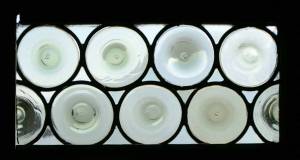
In his latest column on the history of low energy building in the 20th century, Dr Marc Ó Riain charts the surprisingly fascinating history of double glazing.
Internet of Things dominates ISH 2019

Today is the last day of ISH, the bi-annual exhibition for the combined topic of water and energy, which is on at the exhibition grounds in Frankfurt. Titled as ISH, it is the world’s leading trade fair for a range of associated topics, materials and services.
New research raises spray foam health questions
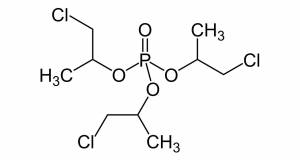
New studies are seeking to answer questions about how spray foam insulation, and materials containing formaldehyde, affect indoor air quality —and some of the early results are worrying.
Daylight, embodied carbon & more: advances in the AECB PHribbon software
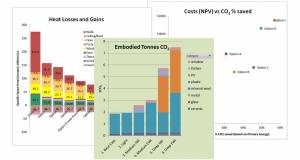
Tim Martel of Optimal Retrofit describes recent advances in PHribbon, an Excel tool designed to improve the functionality of the passive house design software PHPP.
The utopian Usonian

Dr Marc Ó Riain looks at the influence of 20th century architectural giant Frank Lloyd Wright on low energy building design.
Filling the retrofit policy void

The imperative to engage in evidence-based deep retrofit grows by the day. With the UK government dragging its heels, Peter Rickaby finds signs of hope in local initiatives, and in burgeoning Irish efforts.
The House of Tomorrow, 1933

In his third column on visionary eco-buildings of the 20th century, Dr Marc Ó Riain looks at the pioneering passive solar designs of Fred Keck.
Breaking the mould in Thamesmead

The net effect of poor insulation levels, underheating and under-ventilation in buildings poses a major public health threat. Peter Rickaby describes one pioneering London project that’s taking a practical, methodical – and scalable – approach to solving the problem.
The prebiotic passive house

As understanding grows of the importance to human health of good bacteria in our environment, and new hospitals in the US start to undergo ‘prebiotic’ treatment, Dr Peter Rickaby asks how long it will be before microbiology becomes a core part of building design.
1948: The Dover Sun House

In his second column on visionary eco-buildings of the 20th century, Dr Marc Ó Riain looks at the Dover Sun House, which used a pioneering salt solution to capture and store solar energy
A brave new world: Oil and architecture
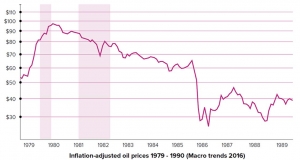
Innovations in low energy building were spurred in the 20th century by oil crises, but the political impetus for meaningful change receded once the crises ended, explains Dr Marc Ó Riain, bringing an attendant failure to set meaningful building regulations.
Policy for zero, or zero policy?
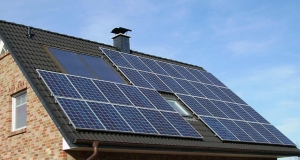
The penny is starting to drop that profound energy saving efforts in buildings – right up to zero emissions levels – are both necessary and urgent if the UK is to honour its climate change targets. So what’s holding up meaningful action, asks Peter Rickaby?
Why construction contracts must change in light of Grenfell
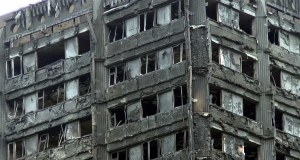
Design-and-build contracts have become increasingly common in construction, a trend that must be reversed in light of the Grenfell Tower fire if we are to deliver safe and high quality buildings, says quantity surveyor Michael McCarthy.
England, Scotland & Wales will fail to meet ‘nZEB’
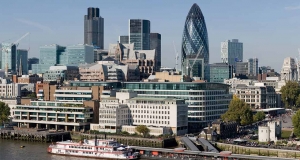
London encouraged to adopt its own building energy standard.
What is the AECB Silver Standard?
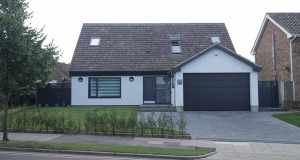
In the current policy vacuum, many questions have been raised about the future of sustainable construction. Despite this uncertainty, there is a steady growth of interest in the AECB Silver Standard, writes architect Mark Siddall.
Time to move beyond the architecture of the oil age

We must discard the architectural baggage of the 20th century to solve 21st century problems – argues our columnist Marc Ó Riain – and relearn some lessons from before the advent of oil.
Cutting-edge technology on display at ISH 2017
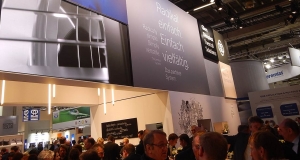
ISH, the world’s biggest showcase for bathroom design, heating, air-conditioning and renewable energy technology, took place last week in Frankfurt. Leading energy consultant Mark Shirley of 2eva.ie went along to see what was on offer.
Who needs retrofit standards?
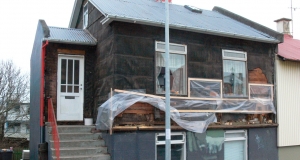
We all do, argues Dr Peter Rickaby, but the goal of mass retrofitting our energy inefficient building stock is hampered by the fact that when it comes to most retrofits, we simply don’t know what we’re trying to achieve.
Can year-round internal air quality be achieved without fans?
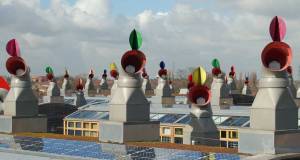
At first glance, designing out electrical fans from ventilation strategies may appear attractive, and even sustainable. Simon McGuinness offers some home truths.
Let’s move beyond the sustainable city oxymoron

A truly sustainable built environment hinges on a multiplicity of factors, not least including the context within which a building sits. Dr Peter Rickaby argues that a focus on cities may lead us in the wrong direction.
Are social housing retrofit efforts failed by finance models?
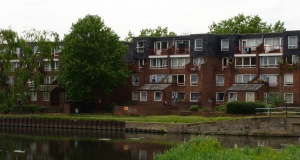
Roughly 50,000 excess winter deaths occur annually between the UK and Ireland, with fuel poverty a primary cause. Yet although concerted social housing retrofit efforts could help tackle climate change while preventing thousands of senseless deaths of vulnerable people, flawed financial modelling is letting us down, argues Peter Rickaby.