
Green building & energy links, Sept 16
Written by Lenny Antonelli
Green Building isn't a fad. The Top 100 (green contractors) generated $38.69 billion in revenue in 2008 from projects registered with or certified by third-party rating groups under objective environmental or sustainable development standards. This marks a startling 70% [increase from] $22.76 billion [in revenue generated] for the group in 2007. Green Building Law Update
The Jevons paradox: How energy efficiency improvements could be undermining sustainability: Green Building Advisor
How do internal and external finishes effect energy performance? Green Building Advisor
Talking Head David Byne's vision of a perfect city: Wall Street Journal
New York state senate introduces Pay-As-You-Save type scheme
Written by Lenny AntonelliThe Pay As You Save (PAYS) concept that we at Construct Ireland have been promoting - the idea of providing up front financing for low energy refurbs and charging householders over time on their utility bills - has been gaining popularity, as I blogged about recently (here and here). Now the New York state senate has passed a law that will enable homeowners to avail of energy upgrade loans they can repay over time on their energy bills. It's a bit different to the PAYS concept we're promoting, which would involve a repayment tariff attached to a household bill rather than a loan attached to an individual bill-payer. But the general idea is the same.
Richard Defendorf writes on GreenBuildingAdvisor.com:
The Green Jobs initiative, which is designed to provide upfront financing for energy-efficiency retrofits to both homeowners and businesses, is similar to programs already offered by other jurisdictions, including municipalities in California, Colorado, and Virginia, and the city of Babylon, New York, on Long Island. Even in the U.K., the city of London is trying to address the energy inefficiencies in its aging housing stock by offering homeowners subsidies for weatherization improvements.
The initiative will be financed through the sale of carbon emission credits under a local cap-and-trade initiative for power plants
Defendorf explained how the programme will work:
The loans will be administered by the New York State Energy Research and Development Authority, which focuses primarily on the reduction of petroleum consumption but also on research into the environmental effects of energy consumption, the development of renewable resources, and other technology innovations. The loan limit for each residential customer is $13,000, and $26,000 for each business. Loan costs will be added to participants’ monthly energy bills, although the energy savings from each retrofit – which should reduce usage by 30% to 40% – is expected to be larger than the loan payment
Joseph Little Architects launches sustainable design consultancy
Written by Jeff Colley
Leading green architect Joseph Little has launched a specialist green design consultancy to assist architects and building companies. On Monday 14 September environment minister John Gormley officially launched Building Life Consultancy, the new initiative of Joseph Little Architects at the company’s offices in North Great George’s St.
Deadline for Green Awards applications approaches
Written by News Desk
Irish companies and public bodies interested in recognition for their contribution to the environment have less than two weeks to apply for a Green Award. The deadline for entering this year's Green Awards has been extended to 18 September. Construct Ireland will sponsor the Green Building category for the first time this year.
We're busy at work on the next issue of Construct Ireland, which is due out in early September, so blogging might be a bit thin over the next week or two.
But for now, here's a few interesting stories worth checking out:
Australian scientists develop world's solar cell (apparently): Inhabitat
The world's tallest timber building planned - but will it sequester carbon? Treehugger
Guide to eco-friendly furniture: Green Building Advisor
Demystifying green roofs: Green Building Law Update
Isle of Islay to be powered by the tide? Guardian
Hemcrete hits North America: Inhabitat
Construct Ireland defies recession with 11.4% circulation rise
Written by News Desk
Despite the construction industry downturn, Construct Ireland has announced an 11.4 per cent increase in circulation over the last year, the largest percentage circulation increase of any Irish magazine.
'Pay As You Save' style programme in Long Island
Written by Lenny AntonelliThe Pay As You Save (PAYS) concept that we at Construct Ireland have been promoting - the idea of providing up front financing for low energy refurbs and charging householders over time on their utility bills - has been gaining popularity, as I blogged about recently (here and here).
Now the New York State Senate has passed a law that will enable homeowners to avail of energy upgrade loans that they can repay over time on their energy bills. It's a bit different to the PAYS concept we're promoting, which would involve a repayment tariff attached to a household bill rather than a loan attached to a individual bill-payer. But the general idea is the same.
Richard Defendorf writes on GreenBuildingAdvisor.com:
The Green Jobs initiative, which is designed to provide upfront financing for energy-efficiency retrofits to both homeowners and businesses, is similar to programs already offered by other jurisdictions, including municipalities in California, Colorado, and Virginia, and the city of Babylon, New York, on Long Island. Even in the U.K., the city of London is trying to address the energy inefficiencies in its aging housing stock by offering homeowners subsidies for weatherization improvements.
The initiative will be financed through the sale of carbon emission credits under a local cap-and-trade initiative for power plants.
Defendorf explained how the programme will work:
The loans will be administered by the New York State Energy Research and Development Authority, which focuses primarily on the reduction of petroleum consumption but also on research into the environmental effects of energy consumption, the development of renewable resources, and other technology innovations. The loan limit for each residential customer is $13,000, and $26,000 for each business. Loan costs will be added to participants’ monthly energy bills, although the energy savings from each retrofit – which should reduce usage by 30% to 40% – is expected to be larger than the loan payment.
Open House Dublin 2009 to showcase green buildings
Written by Lenny Antonelli
The Irish Architecture Foundation has announced its fourth annual Open House Dublin event. Over the weekend of October 8 to 11, buildings in Dublin selected for their architectural quality and interest will be open to the public.
Could wind farms release more carbon than coal power stations?
Written by Lenny AntonelliIn the latest installment of his excellent Greenwash column, the Guardian's Fred Pearce asks whether a wind farm could result in more carbon emissions than a coal-fired power station. Referring to a proposed 187 square kilometre wind farm on the Shetland Islands - potentially the largest in Europe - Pearce writes:
More than half of the wind turbines in Scotland are on highland peat. This is not sensible. Scottish peat bogs hold three-quarters of all the carbon in British ecosystems – equivalent to around a century of emissions from fossil fuel burning.Apart from water, peat bogs are largely composed of huge volumes of saturated, undecayed plants. A single hectare typically contains more than 5000 tonnes of carbon, ten times more than a typical hectare of forest. But any disturbance leads to lower water levels and to the peat drying, oxidising and releasing its carbon, says biochemist Mike Hall of the Cumbria Wildlife Trust.
The bog can decompose for hundreds of metres round every turbine, potentially releasing millions of tonnes of carbon. The process is slow, but frequently unstoppable, Hall says. So many wind farms may eventually emit more carbon than an equivalent coal-fired power station.
This poses the questions - considering so much talk of expanding wind power in Ireland has centred on our boggy west coast, and considering Bord Na Mona's plans to become a major player in the wind sector, has any analysis been carried out of the potential for wind farm development to release large quantities of carbon from Irish bogs? Will this be considered on a case-by-case basis for wind farms proposed in boggy areas?
More...
Over on Treehugger, Warren McLaren wonders about the potential for timber housing to act as a carbon sink, referencing an Australian report (scroll down) on the topic. He writes:
And I remembered a report I saw last month in The Age newspaper that suggested that timber frame houses were excellent carbon sinks. Not a trick that steel can replicate. According to research:
Almost 100 million tonnes of carbon is stored in timber in Australian houses, with about 2 million tonnes of carbon dioxide equivalent added each year as new houses are built ...
That annual addition would absorb about 0.4% of Australia’s total greenhouse gas emissions (as measured in 2006), but has been on the decline as Australian houses have utilised more bricks, concrete, metal and plastics in the past 20 years. The study noted that were more wood used, “annual carbon storage in houses could rise from 1.6 million tonnes in 2008 to 4 million tonnes in 2050.”
He also notes:
The report, entitled “Dynamics of Carbon Stocks in Timber in Australian Residential Housing” does need to be considered with a degree of circumspect, because it was commissioned by industry body, Forest & Wood Products Australia, who obviously have a vested interested in higher timber use.
However, industry influence aside, the researchers at Melbourne University's Department of Forest and Ecosystem Science, and the NSW Department of Primary Industries did collate some intriguing figures. For instance, they calculated that whilst most wood used in houses was historically sourced from Australian native forest or imported timber, these days 80% is derived from domestic softwood plantations.
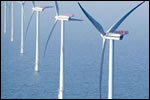
ELECTRICITY COMPANY Airtricity has been ordered not to use the term “green electricity” in its advertising, following a complaint by An Bord Gáis to the Advertising Standards Authority of Ireland (ASAI).
The ESRI on Ireland's carbon reduction options
Written by Lenny AntonelliIt may be over two weeks since it was published, but I still thought it would be worth attempting to summarise the main points from the ESRI's 'Policy Options to Reduce Ireland's Greenhouse Gas Emissions' report. Ultimately it recommends the inevitable, a carbon tax, which it says will discourage carbon emissions while allowing 'actors' in the economy to respond flexibly based on the most appropriate methods of reducing carbon in their particular sector. It would also provide revenue for the government to offset the negative effects of a rise in fuel prices, enabling it to encourage competitiveness through reductions in labour and income taxes, and to support the vulnerable. What I find most interesting is the acceptance that we need to put a price on the limited capacity of the atmosphere to absorb man-made carbon emissions - if that's the case, don't we also need to put a price on other finite elements of the biosphere that we exploit, such as biodiversity?
Among its most interesting observations and conclusions are the following:
Energy efficiency measures that don't save much energy
Written by Lenny AntonelliRob Moody has posted an interesting article on Greenbuildingadvisor.com about home energy efficiency measures that don't actually save much energy.
Among his suggested culprits?
Boiler tune-ups, floor insulation, window replacement and cooling your attic.