

Displaying items by tag: Issue 44
Visionary vernacular
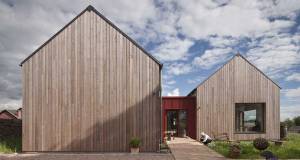
Can a low energy building be truly sustainable if it doesn’t fully consider its occupants needs? The latest offering from one of Scotland’s leading green designers uses passive house knowhow to signal the way to pragmatic, modest, occupant-centric architecture.
Big picture - Pepper Tree Passive House
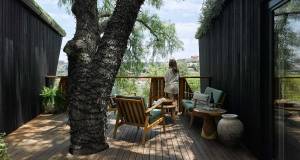
We take a look at Pepper Tree Passive House, a small secondary dwelling attached to a young family’s home in the Australian Illawarra region.
Adaptation sensation

Sometimes a building comes along that asks challenging questions. Chris Croly, building services engineering director of BDP, describes one such example – a building designed to tackle the specific energy profile of offices, while trialling an innovative, dynamically controlled approach to adaptive comfort.
Kieran Holohan appointed MD of Saint-Gobain Ireland

Having joined Saint-Gobain in 2007, Holohan has spent the last nine years as Saint-Gobain Ireland’s marketing director. Prior to this, he held the positions of marketing manager with Moy Isover and strategy manager for Saint-Gobain Ireland.
Offaly new build installs Grant integrated heating package
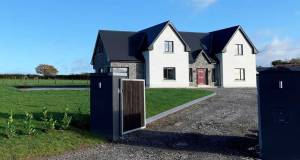
Leading heating technology manufacturer Grant has sparked the interest of many self-builders throughout Ireland, with its integrated heating packages for new builds, due to the high efficiencies and substantial long-term financial and carbon savings the packages can deliver for the homeowner.
Medite Smartply makes TU Dublin green building donation

Medite Smartply has announced a donation of €250,000 to Technological University (TU) Dublin, to support the development of Design + Construct, a centre for collaborative, multidisciplinary education that will drive performance in the architecture, engineering and construction (AEC) sector through talent and technology.
Eco Slate boost circularity credentials with UK production
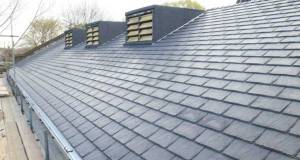
Beattie Passive lands frameworks and ISO certification

Pioneering passive house modular housing provider Beattie Passive has had a busy start to 2023: being named a supplier on two multibillion pound frameworks for new build and retrofit, achieving certifications for environment, quality and health and safety, and launching a new website.
Proctor launches range of online services
Sustainable building product supplier A. Proctor Group has introduced a new online U-value calculator, condensation risk analysis software, and members area with a range of technical supports available to architects, contractors, and customers.
Partel develops two new fire-rated breather membranes

Partel, a leading manufacturer of airtight and windtight membranes, has developed two new fire-rated breather membranes that exceed current fire safety regulation levels for high-rise and high-risk buildings: Exoperm Duro A1 and Exoperm Mono Duro A2.
New Licence Plus scheme undermines retrofit standards, experts say
Ireland joins whole life carbon data initiative
Ireland is to participate in a pioneering European initiative aiming to boost the availability of quality building whole life carbon data, a critical step towards full decarbonisation.
Show Me the Bodies: How We Let Grenfell Happen

Scotland to mandate passive house for new homes
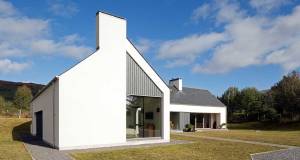
Must listen: Zero Ambitions Podcast
WorldGBC launches green building policy principles for governments
Government supported almost 27,200 home energy upgrades through SEAI in 2022
Passive house isn’t just about efficiency – it’s about social justice
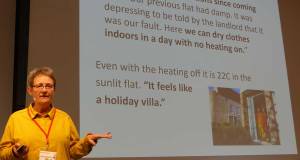
The potential of the passive house standard to change the world isn’t restricted to tackling climate change – it’s about social justice too.
Solar panels to receive VAT drop in aim to boost uptake
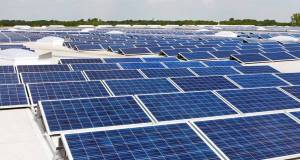
In a bid to increase the uptake of solar technology in Ireland as families and businesses continue to negotiate the energy and cost of living challenges, the Irish government has announced they intend to drop the VAT rate on the supply and installation of solar panels to zero.
EU votes through EPBD recast
Mass timber consultation: have your say by 21 April to change the rules

Mass timber comes into its own in terms of decarbonising tall buildings, which tend to rely on high embodied carbon materials such as steel and reinforced concrete. But regulatory change is needed to enable mass timber to fulfil its potential, as IGBC head of policy and advocacy Marion Jammet explains.