


Jeff Colley is the editor of Passive House Plus. He won the Green Leader award at the 2010 Green Awards for his advocacy work on the inclusion of energy ratings in property advertising, and a proposal to finance energy upgrades via utility bills.
He established Construct Ireland (for a sustainable future), Ireland's pioneering sustainable building magazine, in 2003. The magazine evolved into Passive House Plus in late 2012, the world's first English language magazine focused on passive house, as well as other aspects of sustainable building.
He is also a founder of Éasca, (the Environmental and Sustainable Construction Association) , an organisation set up to develop and promote a membership of approved companies offering genuinely sustainable solutions.
He writes a regular column for the Sunday Times, and has authored, co-authored and contributed to articles on sustainable building for numerous newspapers including the Irish Times, The Sunday Business Post, the Irish Examiner & the Sunday Tribune.
SEAI CEO on alternative Part L compliance: gap for passive house in Ireland & UK?
As recently revealed on this website, the CEO of the Sustainable Energy Authority of Ireland, Dr Brian Motherway, has explained that buildings don't need to achieve particular results in the Deap software (Ireland's equivalent to SAP) to demonstate compliance with Part L.
UK & Ireland breach renewables in building regs law - key chance to combine energy efficiency & renewables
What a way to start the new year: when the bells rang in on 1 January Ireland and the UK breached a legally binding EU requirement to set minimum levels of renewable energy in building regulations for new builds and major renovations - including dwellings and non-domestic buildings in both cases.
Irish REFIT & renewable heat incentive on the way?
One of our sources in DCENR informs us that the department is set to go to consultation "within a month or so" on a new renewable energy feed in tariff scheme - including microgenerators - and, separately, a renewable heat incentive scheme.
SEAI: Deap targets aren’t only way to meet Part L
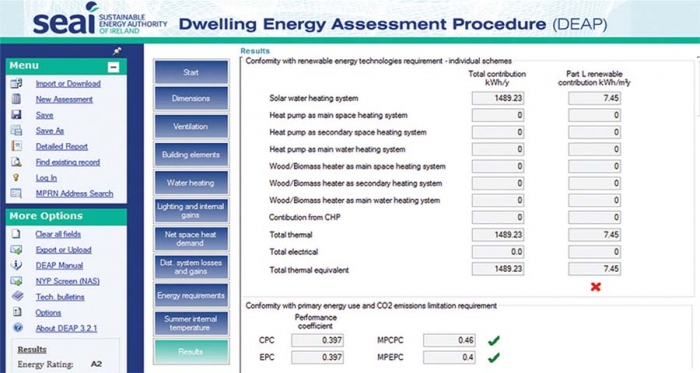
Specifications for new homes which fall short of energy performance targets in the Dwelling Energy Assessment Procedure software may nonetheless comply with Part L of the Irish Building Regulations, the Sustainable Energy Authority of Ireland has said. This is potentially a significant development for passive house, a proven ultra low energy building strategy which is often undermined by the relatively crude assumptions in the Irish regulatory guidance and Deap software.
Media HQ shows ultra low energy vision
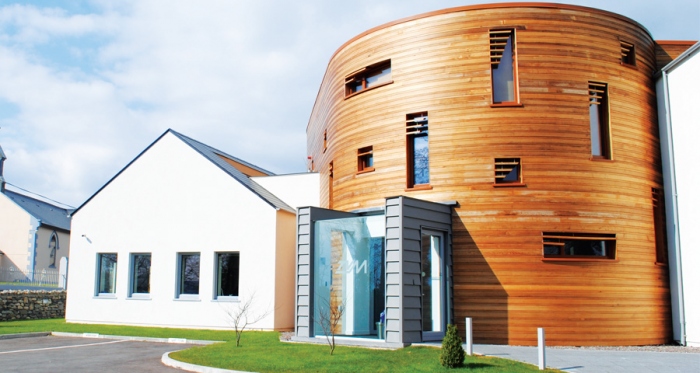
While Ireland’s minimum energy performance regulations for dwellings have come on leaps and bounds in recent years, standards for non-domestic buildings have remained untouched. Which makes forward-thinking media production company TVM’s new ultra low energy HQ all the more impressive.
Advantage Austria to host passive house CPD event in Edinburgh on 2 October
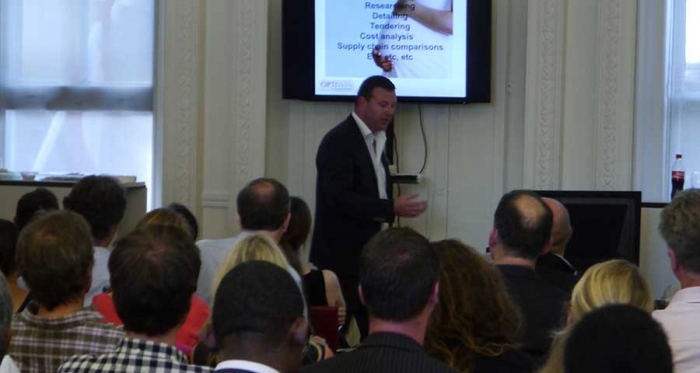
Advantage Austria is to host a CPD-oriented presentation and networking event on passive house and low carbon building in Edinburgh on 2 October.
Next gen Irish designers & contractors to be steeped in passive house?
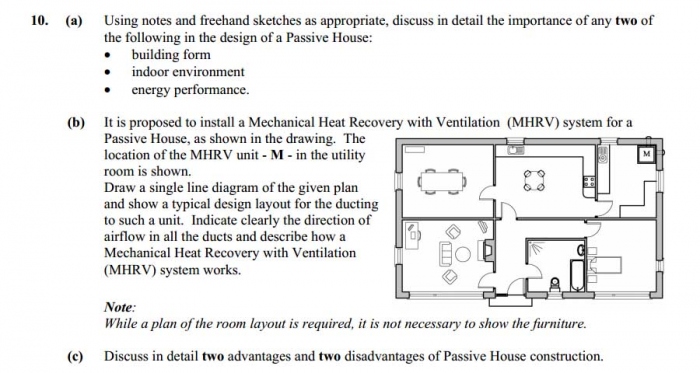
I believe the children are our future, as the stomach-churningly saccharine song line goes. If the emerging evidence from recent Irish 2nd level exam papers are anything to go by, the construction studies teachers share that sentiment, and are ensuring that the next generation of Irish designers and contractors will have a detailed understanding of how to design and construct passive houses.
The Daft.ie report is wrong: tighter building regs don’t hurt profits
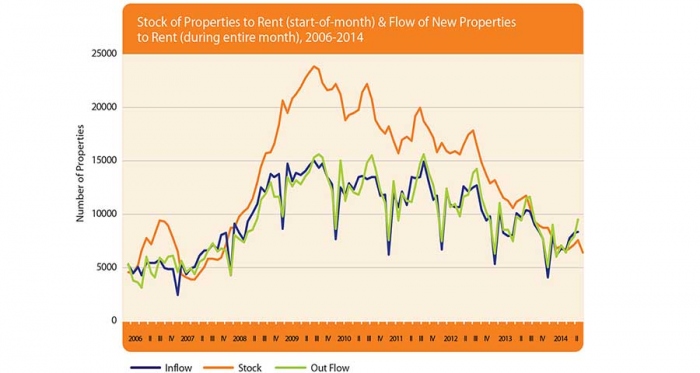
Leading Irish property portal Daft.ie’s latest quarterly rental report was published this week, and included an assertion on the link between construction and planning requirements and the profitability of development – an assertion our editor felt Jeff Colley compelled to debunk.
Irish housing supply could double within two years - CIF

The supply of housing could double within two years if the government were to follow seven simple steps, according to the Construction Industry Federation. The CIF has suggested that these measures could see 20,000 housing units built a year by 2016, curtailing the excessive prices rises in the Dublin housing market.
Do Ireland’s energy efficiency regulations penalise energy efficiency?
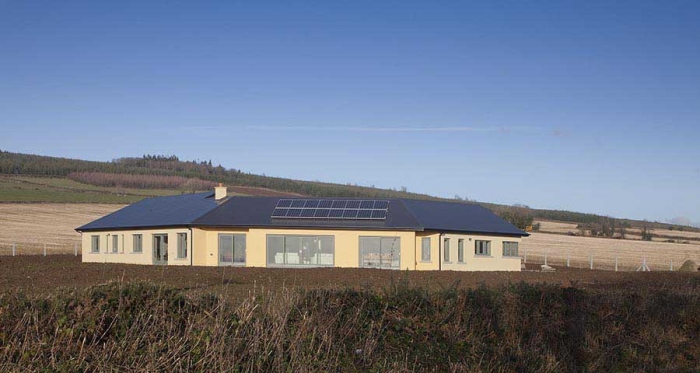
What’s not to like about building regulations that demand 60% energy savings compared to boom time standards, and mandate the use of renewable energy? Glitches in the guidance documents, that’s what – glitches that unwittingly disincentivise energy efficiency best practice and risk causing building damage and compromising occupant health.