

Displaying items by tag: biomass
19th century barn gets 21st century fabric upgrade
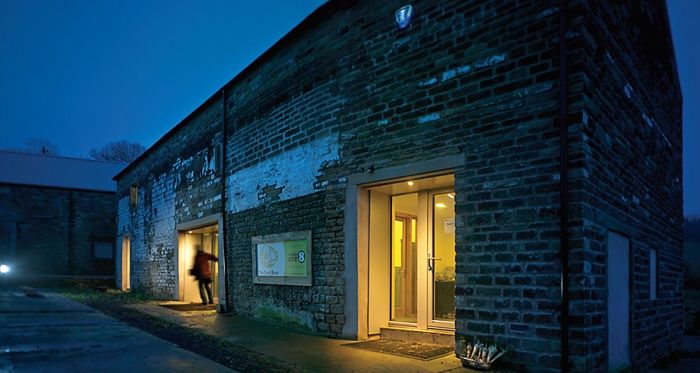
Hitting Enerphit – the passive house standard for retrofits – wasn’t challenging enough for one Yorkshire retrofit project. The team also had to stop the building falling down, and avoid wholesale changes to the building’s external appearance.
Passive architect walks walk with Carlow home
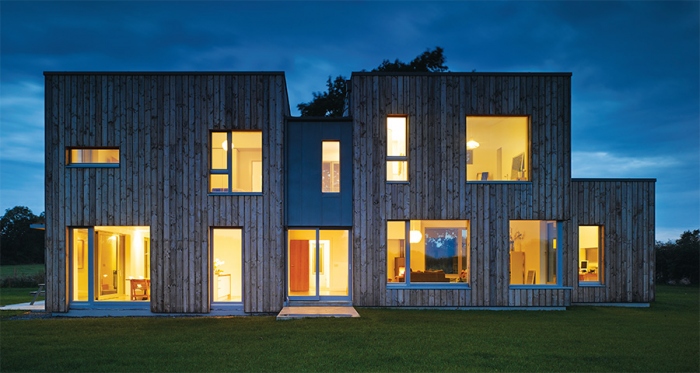
None of the team behind Passive House Plus has the good fortune to live in a passive house – at least not yet – meaning our promotion of passive house comes with more than a hint of “Do as I say, not as I do”. That’s emphatically not the case with certified passive house designer Helena Fitzgerald, who chose to practice what she preaches with her own home, to stunning effect.
Windhager to launch new BioWin 2 pellet boiler at Ecobuild
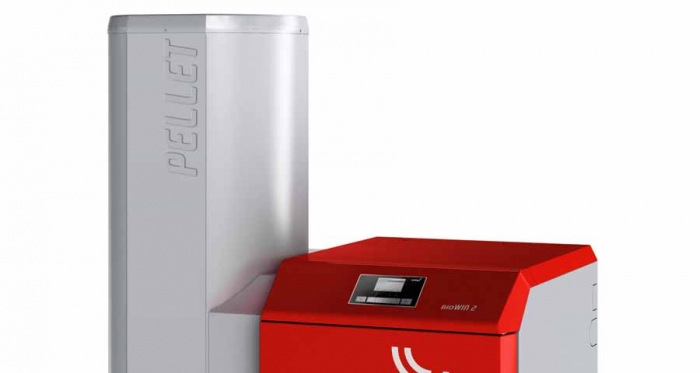
Windhager will launch its latest development, the BioWin 2 wood pellet boiler, at Ecobuild
2014.
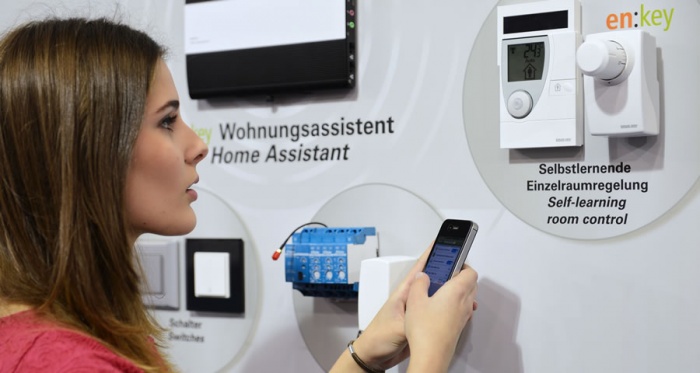
Passive house asserts itself at Frankfurt trade fair
Grants for heat pumps and biomass boilers withdrawn
The government is withdrawing grant support for heat pumps and biomass boilers and reducing grants for other energy efficiency upgrades as part of its new Better Energy national building upgrade programme. The government has allocated an additional €30m to the programme this year in addition to the €60m set aside in this year's budget. It expects the extra funding to support an additional 2,000 jobs in the retrofit sector in 2011.
Sustainability in store

Little did we know when campaigning for the Fingal energy standard in 2005-06 that Construct Ireland would have a direct impact on Ikea’s first Irish store. Driven by a combination of Fingal’s requirements and their own renewable energy policy, the Swedish retail giant has invested in the largest ground source heat pump installation in Ireland and the UK, along with a well-thought biomass system fed by an onsite waste stream and a host of other green measures, as John Hearne reports
Heaven sent

When it comes to redeveloping old buildings, green designers face two choices: replace existing structures with modern, energy efficient buildings or refurbish and avoid the embodied energy and waste of demolition and new construction. Lenny Antonelli visited a redeveloped convent in Booterstown, County Dublin that combines the best of both approaches.
Imperative Energy to finance expansion with equity funding
Imperative Energy, a supplier of large-scale biomass energy solutions, today announced that it has completed a E30m equity funding package with Rockfield Energy LLP, a UK-based private equity firm specialising in renewable energy investments.
Ireland could support 80,000 green jobs, report says

Ireland could become the green energy capital of Europe and support over 80,000 green jobs, according to a new report released by Irish bio-energy firm BioPower.
Launching the report last Wednesday, energy minister Eamon Ryan said: "Clean energy will provide the solution to Ireland's economic and environmental challenges, securing the investment and jobs of the future.
Changes to Battersea power station redevelopment plans
IFA says 8,000 'green collar' jobs possible
THE IRISH Farmers’ Association has claimed 8,000 “green collar” jobs could be created by developing the renewable energy sector in wind power and biomass.
Moate point
A new development in County Westmeath answers a nagging question about district heating: how to make it financially viable when it services energy efficient buildings. Lenny Antonelli visited a housing estate that combines low energy design with an innovative district heating system and ecological timber frame construction
Central line

Developers across Ireland are beginning to see the sense in shifting from individual heating systems to centralised energy production feeding into district heating networks. John Hearne visited a mixed-use scheme in Ballisodare, County Sligo, where a cutting edge biomass energy centre is providing a multitude of different buildings with energy from a green, secure source.
Force of Habit

Two years ago Construct Ireland ran a case study on Mater Orchard, a Mercy Sisters convent building that successfully balanced cutting edge technologies with pragmatic green design. Such was the success of that building, its architects were commissioned by Mercy Sisters in Limerick to repeat the feat. John Hearne visited the freshly completed building to find out how they fared
Part L Revealed
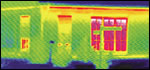
Since the announcement last September by the Minister for the Environment of substantial improvements to be made under Part L of the Building Regulations, speculation has been rife in the construction industry about what the details of the updated regulations would entail. Jeff Colley examines some of the key parts of a regulatory improvement that will help the Irish construction industry to modernise and meet the demands of a rapidly changing world.
Green Rooms

Hotels typically take a heavy toll on the environment, with large amounts of energy used for heating, hot water, lighting, air conditioning and laundry, and huge amounts of waste being landfilled each year. John Hearne visited the Westport Woods Hotel and discovered a highly successful approach to reducing environmental impact that is also yielding substantial dividends in terms of cost savings and positive publicity
Coillte Teoranta
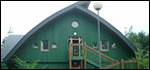
The building is the first all timber office complex in Ireland. It covers almost 2,300m2 of floor space and provides accommodation for almost 100 staff working in a wide range of forestry related disciplines.
Green Electricity

Everyone knows that the cheapest way of doing something can turn out to be very expensive in the end. The decision to make Ireland ’s electricity system so reliant on gas is about to bear this principle out. By Richard Douthwaite.
Staying Power

Responding to the Department of Communications, Marine & Natural Resources’ Green Paper “Towards a Sustainable Energy Future for Ireland”, Mark Coyne, Technical Director of Dalkia Ireland, outlines the challenges and responses to the three main pillars of the Green Paper – sustainability, competitiveness and security of supply.
Heat of the Moment

John Hearne spoke to a number of independent energy experts to develop an impartial view of the main sustainable heating options.