

Displaying items by tag: fingal
Social Climber
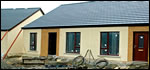
With some of the most impressive moves toward sustainability over the last few years coming in the form of planning requirements, it should come as no surprise that many local authorities are pioneering energy efficient housing in their own housing stock. Jason Walsh visited a site in Oldtown, County Dublin, to see how Fingal County Council is putting sustainability into practice with help from Keenan Timber Frame, Ecological Building Systems, Nutech Renewables and others
Part L Revealed
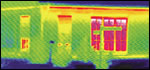
Since the announcement last September by the Minister for the Environment of substantial improvements to be made under Part L of the Building Regulations, speculation has been rife in the construction industry about what the details of the updated regulations would entail. Jeff Colley examines some of the key parts of a regulatory improvement that will help the Irish construction industry to modernise and meet the demands of a rapidly changing world.
EU energy commissioner

Jeff Colley spoke to Commissioner Piebalgs about key issues affecting Ireland’s energy future and the importance of local initiatives such as Fingal County Council’s groundbreaking introduction of sustainable building requirements
Planning for the Future

A marked lack of adequate central government action to promote sustainable house building in Ireland has been recently counteracted by planning authorities such as Fingal County Council taking action into their own hands, and setting standards geared to protect their constituents in an oil and gas scarce future. However, as sustainable building consultant Will Woodrow discovered from surveying planning authorities around the country, local government willingness is not always met with a full grasp of the issues needed to make sustainable housing happen.
From Policy to Practice

As policy makers start to set mandatory low energy and renewable energy requirements as conditions of planning, the ability of the construction industry to find sound low-cost ways of achieving the new standards is becoming a key factor. John Corless speaks to leading sustainable building consultant Jay Stuart of Delap & Waller EcoCo and Paul Gilmartin of Ecobead to discover an approach with enormous potential for en-masse usage.
Saving Plan

Fingal County Council have clearly shown a laudable commitment to innovation by introducing a mandatory planning requirement for seven areas that all new developments reduce energy use and C02 emissions relating to space & water heating to 60% below Building Regulations requirements, with 30% of space & water heating coming from renewable energy sources
Building a low carb future

The need to reduce CO2 emissions and energy consumption from buildings has never been more immediate. There is a growing consensus that we must reduce our dependence on rapidly depleting, carbon intensive fossil fuels, which, amongst other things, will involve overhauling how buildings are designed, constructed and used.
Staying Power

Responding to the Department of Communications, Marine & Natural Resources’ Green Paper “Towards a Sustainable Energy Future for Ireland”, Mark Coyne, Technical Director of Dalkia Ireland, outlines the challenges and responses to the three main pillars of the Green Paper – sustainability, competitiveness and security of supply.
Safe as Houses

Conventional wisdom dictates that higher construction costs — for instance to reduce energy consumption and carbon emissions — would either squeeze developers’ profit margins or increase house prices. Tom Dunne, Head of DIT’s School of Real Estate and Construction Economics, reveals how misguided this view could be...