

Displaying items by tag: Issue 41
Up to 11

In issue 38 of Passive House Plus we published an in-depth assessment comparing the build specs including five wall types to a typical Irish house. To enable the industry to fairly compare a broader range of build options, we now expand that analysis with the addition of four timber frame wall types and two insulated concrete formwork systems
A grid of their own
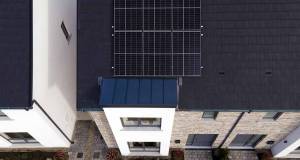
A new development in County Wicklow demonstrates how typical housing estates might be turned into electricity microgrids through solar power and battery storage, with residents buying and selling renewable energy from each other, helping to insulate them from price spikes and outages.
Passive Power
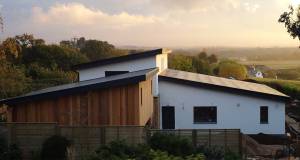
A passive house, by its nature, requires a much smaller amount of energy than a typical home, and when its heating demand is met by electricity, and you cover it in solar PV panels, you can start to see the potential for a whole new generation of passive homes that are semiindependent of the electricity grid. This is the case for Carrstone House in Bedfordshire, which generates so much solar energy it had to be registered as a power station.
Mass timber masterwork

This home on the edge of the Cotswolds, built with cross-laminated timber, now holds the distinction of being the UK’s most airtight home, with the client even doing a significant chunk of the airtightness taping himself. What’s more, it demonstrates how passive homes that generate their own renewable power may escape the worst of the energy price crisis.
Home school

Rural Ireland has a crisis of dereliction, with numerous government policies aimed at breathing new life into thousands of old, vacant buildings. The careful transformation of one 19th century schoolhouse into a small, beautiful home shows a way forward for the sensitive, climate-conscious renovation of many of these properties.
Punk retrofit: fighting the lack of vision on energy upgrades

The world energy crisis 2022

The energy crises of the 1970s did not prompt a major shift in Europe from foreign oil and gas towards energy efficiency and renewables. Will we learn this time around, wonders Dr Marc O Riain
Housing: turning problems into solutions for Ukrainian refugees

Our abundance of holiday homes and other vacant dwellings could be used to house Ukrainian refugees, writes Mel Reynolds.
Max Fordham House verified as UK’s first net zero carbon home
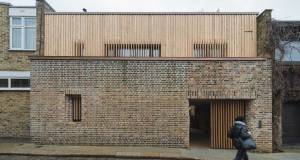
Renfrewshire aims for 3,500 whole-house deep retrofits
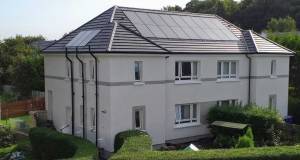
UK’s first passive leisure centre nears completion

Mitsubishi heat pumps 6-7 times lower CO2 than condensing gas boilers
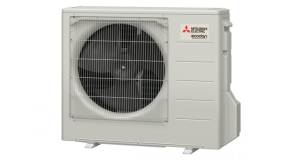
Leading sustainable heating, ventilation and air conditioning systems manufacturer Mitsubishi Electric has produced analysis showing the whole life carbon calculations of its heat pumps may be six to seven times lower than comparable condensing gas boilers.
Ecological disappointed at ‘unambitious’ Part L
Andy Mitchell appointed CEO of Green Building Store

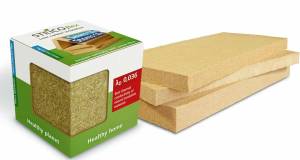
Steico offering free wood fibre insulation samples
Partel launches new Acraline Roll adhesive
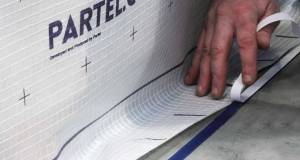
Partel has upgraded the performance and functionality of its Acraline Roll adhesive with new technical features. The company said that Acraline offers a “unique sealing solution for membranes” in the construction of passive house and low energy buildings.
Retrokit tailors software platform for one-stop-shops

Retrokit, the Irish clean tech start-up whose software platform helps housing professionals to make evidence-based decisions for energy upgrade projects, has tailored its software for one-stop-shops managing retrofits under the national home energy upgrade programme.
Techrete aims for net zero carbon by 2030
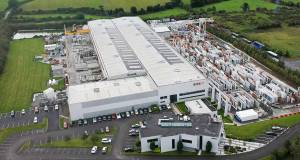
Leading precast concrete facade manufacturer Techrete has pledged to achieve net zero carbon emissions by 2030.
EPDs key to reducing embodied carbon – Munster Joinery
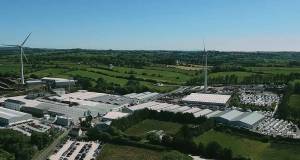
Leading Irish window manufacturer Munster Joinery has emphasised the importance of environmental product declarations (EPDs) for reducing embodied carbon in buildings. The company sees reducing embodied carbon as the next major step for the industry after tackling operational energy.
Huge demand for new deep retrofit grants
Some one-stop-shops will not take on projects with new build extensions.
‘Sufficiency’ key alongside energy efficiency & renewables, says IPCC
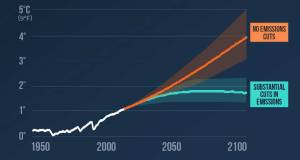
Latest climate report calls for more e� cient use of floor space in buildings