
Parties commit to climate bill - ten materials to save the world - biodiversity thrives in New York
Written by Lenny AntonelliHere's our latest collection of links — let us know what you think.
All Irish political parties commit to passing climate change legislation Friends of the Earth (whether it will be any good or not is another question)
Right idea, wrong result: an insulation job gone wrong Green Building Advisor
Are venture capitalists investing less in energy efficiency? Wall Street Journal
Ten materials that could save the world (apparently) fastcodesign.com
Is New York City an ecological hotspot? New York Magazine
Anger at plans to build new houses on ghost estate Irish Examiner
This new apartment building in Chile looks stunning — but is it green? Treehugger
Just how green are green roofs (and shipping container architecture, and garden sheds)? Treehugger
Passive house scheme wins Isover Energy Efficiency Award
Written by News Desk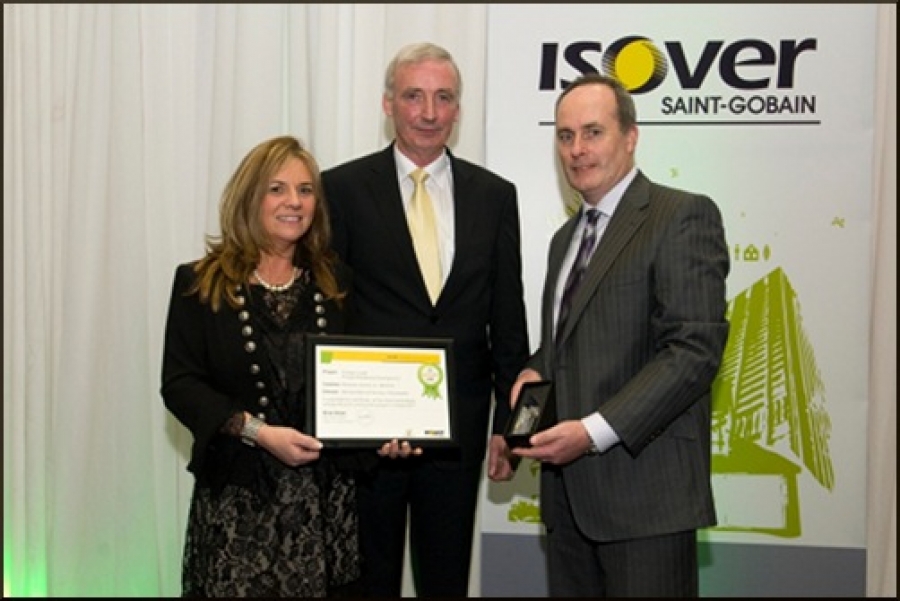
Ireland's first passive house development emerged as the big winner at the first inaugural Isover Energy Efficiency Awards in Dublin on Friday. The Grange Lough project — by developer Michael Bennett and Shoalwater Timber Frame — won first place in the competition and will now go on to Isover's European awards in Barcelona this June. This is the first time Ireland will be represented at the finals.
- a reduction of Vat to 5% for of all energy upgrade repairs, maintenance and improvement works to private buildings
- speed up the roll out of approved capital projects, and fund these through "innovative" methods such as equity partnerships and build-to-lease schemes
- a site value tax to be introduced on "development land"
- prioritising investment in construction and infrastructure to restore the building sector to its "optimum" worth of €18bn per annum
- a "Plan for Ireland" to 2030 based on the principles of "sustainable communities, quality placemaking and environmental responsibility"
- a review of the National Spatial Strategy, and more integrated national, regional and local planning, along with a review of the planning system
- provision of public services such as health facilities, schools and transport networks to be based on "evidence based projections" of need rather than "crisis management"
- Nama lands to be used to create "sustainable urban neighborhoods" and for public infrastructure and services
- design quality, environmental impact and whole life-cycle cost to be considered ahead of price alone for government tenders
- a more flexible approach to unemployment benefit so those in the building industry can obtain part-time work and start businesses while still collecting benefit
Many of the manifesto's wishes are quite vague though, such as its call for "improvements to building regulatory procedures", and for unspecified "minimum design standards" for all publicly funded buildings. It also says the "theory and practice of sustainable development" should be at the heart of government policy on the built environment and public procurement.
Still, it's very welcome to see the RIAI offering a list of ideas ahead of the election. You can read a summary and download the document here. When it comes to the built environment, what would you like to see the next government prioritise?
New BOI mortgage rate for home energy upgrades
Written by News Desk
Bank of Ireland has launched Ireland's first "green equity release" loan. The new mortgage feature allows customers to unlock equity in their home to invest in energy efficient home improvements.
Homeowners with SEAI grant approval for their home improvements can now avail of the bank’s LTV mortgage rate of 3%.
GB Shaw's rotating hut election policies on housing China plans megacity
Written by Lenny Antonelli 
Inside George Bernard Shaw's rotating writing hut
Linking you up with some green building and energy stories:
What could today's passive house designers learn from George Bernard Shaw's rotating hut? Treehugger
Is sustainable design wearing thin? Guardian
China to create world's largest mega city Infrastructurist
Can straw bales be used to insulate under a concrete slab? Green Building Advisor
Future housing supply in Ireland — for some interesting commentary from the Ireland After Nama blog about the Construction Industry Federation's call for new house building, see here and here.
As the election approaches, where are the parties' policies on housing and planning? Ireland After Nama
The Canadian ancestry of the passive house Treehugger
Profile of a passive house in Wisconsin Metro Hippie
Modern Rwandan education centre made with local materials Inhabitat
Dwelling airtightness in Ireland: where we are, and where we're going
Gavin O Sé
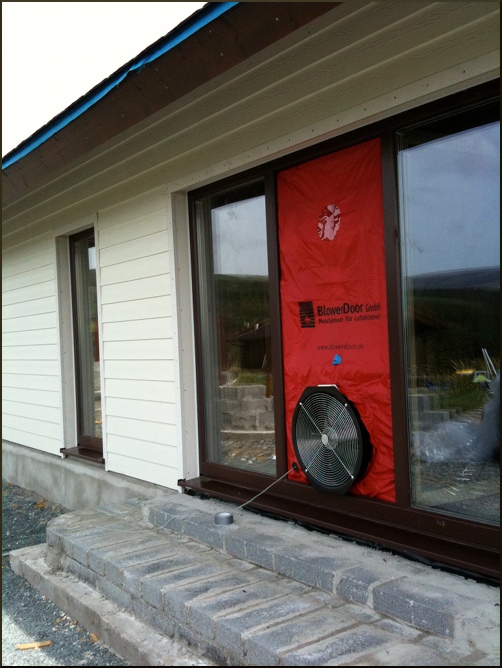
A blower door test being conducted at Jer Rynhart's super air-tight Wicklow home — the house has an air changes per hour rate of 0.11
By Gavin O Se, NSAI certified airtightness tester, certified passive house designer and BER assessor with Greenbuild
Recent issues of Construct Ireland have featured houses that have been to the very best international standards of airtightness: eg Jer Rynhart's house in Wicklow and Tim O'Donovan's house in Cork, both of which had just a fraction of an airchange under standardised test conditions.
At the same time as these super-airtight houses are being built, the latest draft Part L of the Building Regulations is proposing to lower the air permeability rate for new dwellings from its present level of 10 m3/(hr.m2) to 7 m3/(hr.m2).
I was quite disappointed ― though unsurprised ― to learn of the new maximum airtightness level. It set in process a train of thoughts, the result of which is this article, in which I will look at:
• Where are we in terms of airtightness and airtightness testing?
• Where are we going?
• Where do we stand internationally?

The pioneering energy charity Energy Action is set to hold a two-day fuel poverty conference in Dublin Castle on 7-8 February.
“The introduction of the carbon tax on fuel costs in 2010 has
further exacerbated the health and monetary problems for the fuel poor,”
said Energy Action general manager Charles Roarty. “Due to low income
and possibly debt these households will not have the funds needed to pay
for retrofitting measures, even allowing for SEAI’s Home Energy Saving
scheme grants.”
Termites trump human know-how on green building
Written by News Desk
Mankind can learn more about cutting energy consumption and carbon emissions by studying insects than by engaging in a space-race approach focused on high tech answers, leading Irish architect Seán Harrington writes in the new issue of green building and upgrading magazine Construct Ireland.
[video:www.youtube.com/watch?v=gVLu99Ja2mA 500x400]
More...
Ghost estates manual pays lip service to sustainability
Sadhbh Ní Hógáin
By Sadhbh Ní Hógáin
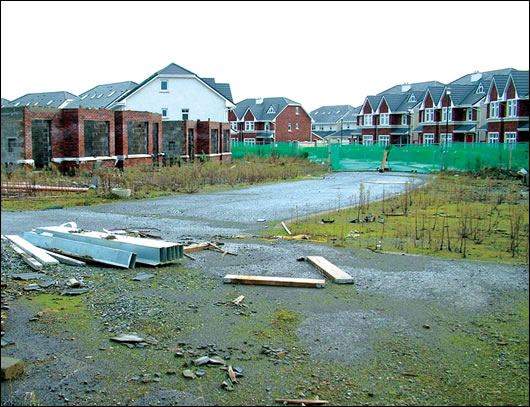
Managing and Resolving Unfinished Housing Estates is a consultation manual published by the Department of Environment late last year. It identifies unfinished housing estates and outlines the health and safety issues surrounding these unfinished developments.
The report says that the over-supply in key metropolitan areas is not extensive and should improve in the short to medium-term. However, part completed or part occupied developments in areas with a weaker housing market may prove problematic.
The main proposals outlined are to complete unfinished housing estates identified by the National Housing Development Survey, ensure compliance with health and safety legislation and identify the roles and responsibilities of key stakeholders.
The report proposes that a team from each local authority maintain an up to date register of housing developments. This is a positive step, but the key responsibilities of the team should be widened to include the environmental assessment of housing developments.
While it is a positive step by the department to ensure the health and safety of unfinished housing developments, it is important to consider the long-term sustainability and environmental impact of finishing these estates. The report’s main aim is the “delivery of sustainable communities...and sustainable development...”, however there is no definition of sustainability. The three pillars of sustainability — the environment, the society and the economy — should be outlined and used as a basis to evaluate unfinished housing estates. The environmental impact of unfinished housing developments should be considered in terms of promoting sustainable living. A review of demand for housing, the existence of adequate local public transport and the availability of jobs and amenities within a locality are key to sustainable living. No alternative solutions are proposed for sites in areas with a weaker housing market.
The site resolution plan for problematic developments in areas with a weaker housing market should be extended to include the wider environmental impact of completing these developments. For problematic sites the focus should be promoting sustainable solutions. Although the environmental cost of demolishing a development may prove high in the short-term, the long-term environmental cost of completing developments in areas with low housing demand, poor local employment and poor public transport outweighs the short-term cost. This analysis should be included in the forward planning section of the report to promote sustainable low energy communities.
The report’s proposals are based on the National Housing Development Survey (2010). This survey was crucial to identifying unfinished housing estates. However, the report should extend this survey to include technical surveys of all unfinished estates. These surveys should include a review of services, access, safety, structural defects and a review of the quality of the housing stock with a focus on energy and carbon. This survey should focus on developments in areas with a weaker housing market to determine the value and viability of completing them.
Based on the extended survey a cost-benefit analysis should be carried out. This analysis should be used to evaluate the cost of completion — including upgrading the dwellings to a low energy standard — versus demolition of these developments. The analysis should include provision of adequate local public transport, the provision of amenities and the existence of a local job industry. Demolition of sites should be carried out where sites do not satisfy this analysis.
The report is a positive step to ensuring the health and safety compliance of occupied and part occupied unfinished housing developments. However, it would be enhanced if it examined the environmental impact of these developments. The report would also benefit from a detailed cost-benefit analysis which should include the economic, social and environmental costs of completing developments with particular focus on areas with weak housing demand.
Sadhbh Ni Hogain is a structural engineer working at EOS Future Design. She recently completed a MSc in advanced environmental and energy studies from the Centre For Alternative Technology, Wales.
William McDonough is arguably the world's most famous green architect and is the father of cradle to cradle design. Here he is describing one of his planned eco-cities in China. Keep watching until the end, it gets good. This is taken from McDonough's Ted talk. There's a longer version of it here.
[video:http://www.youtube.com/watch?v=eY4o3WzCfmM&feature=player_embedded 500x400]
Green building trends for 2011 going off grid should cold homes be illegal?
Written by Lenny AntonelliHappy new year to all Construct Ireland readers. We're getting right back into the swing of things here with a new issue due out before the end of the month. Here's a few interesting stories you might have missed over the holidays.
Six green building trends to watch for 2011 Jetson Green
Ten more (slightly US-centric) trends for 2011, also from Jetson Green
A review of green technology in 2010 Guardian
Largest postwar prefab estate set to be demolished Guardian
Following on from Mark Stephens's blog posts for us on going off grid, here's another guide from Green Building Advisor
How one US town is dealing with the problem of vacant houses New York Times
Should dangerously cold houses be illegal? (I'm going with yes on this one) Treehugger
From the Ireland After Nama blog, a post on the "true extent of Dublin's functional urban region", and a series of interesting-sounding papers on the future of Dublin city
China's ghost cities building on floodplains (again) Grand Designs passive house
Written by Lenny AntonelliHere's some linkage for y'all.
Think Ireland's ghost estate problem is bad? China may have up to 64 million vacant homes Sustainable Cities Collective
The UK is backtracking on plans for a green bank Guardian
Clare councillor wants to build on floodplain. Will we ever learn? Ireland After Nama
A striking renovation and extension project in Kentucky gets Leed Platinum status Treehugger
The most popular design and architecture posts of 2010 Treehugger
Crossway, an eco house featured on Channel 4 TV show grand designs, meets the passive house standard Green Building Advisor
A US perspective on using EPS to insulate foundations Green Building Advisor
Interesting analysis of the government's new greenhouse gas emissions targets Irish Economy