
Size matters, but good design matters more
Written by Lenny Antonelli
Experimental Dwelling for a Greener Environment (Edge)
Low impact cabin
Hokkaido house
The Tiny House Blog is also worth checking out. And if you want to see what a really tiny house looks like, check out this video from Tumbleweed tiny houses - it's far too small for most people to bear, but it's nonetheless fascinating.
The best green buildings, architectural flops & ventilation debate
Written by Lenny AntonelliThe best green buildings of the last 30 years: Architect Magazine
Stunning eco apartments in Switzerland: Treehugger
Is it acceptable to allow some air infiltration through a building structure as a means of ventilation? Green Building Advisor
Renowned green architect Michelle Kaufmann blogs about a discussion with architect and passive house expert Walter Unterrainer: Michell Kaufmann Studio
China's incredible "car straddling" bus: Infrastructurist
Architecture's ten biggest failures of the past 25 years: Infrastructurist
Can heat be stored in the sand beneath a house? Green Building Advisor
Interesting post on the challenges of selling a new passive house in a tough US property market: Green Building Advisor
Frank Gehry knows more about green building than he let on
Written by Lenny Antonelli

Frank Gehry's Novartis building in Switzerland (at centre). Photo by Brad P .
Renowned architect Frank Gehry appears to know more about green building and architecture than he originally let on. Back in May, Gehry criticised the cost of green building as well as Leed, the US's environmental rating system for buildings. I covered his comments at the time and was quite critical writing: "Gehry has designed some of the most iconic buildings of our times, but I think his comments are reflective of a wider lack of understating among many architects when it comes to green building and architecture."
Thankfully, Gehry has now given an interview with US broadcaster PBS in which it becomes quite clear that he knows a lot more than his initial comments let on. He's actually quite insightful. Some highlights are below, but I'd highly recommend reading the full interview - Gehry goes on to speak about green materials, minimising construction waste and using stationary bicycles to provide energy in one of his projects, among various other topics.
Some choice quotes from Gehry:
A lot of our clients don’t apply for the LEED certification because it’s complicated and in their view, they simply don’t need it.
There are other ways to encourage green building. For example, we did the Novartis building in Switzerland.
They don’t use the LEED program over there, the government just says this is what you can and can’t do, and things have to be built in a sustainable way. So really it’s a political thing: People taking responsibility on an individual level combined with government programs that give mandates that say “this is how we’re going to require people to build.” Our federal government is trying to take steps in that direction. I just met with someone from the Obama administration, they are trying to enact tougher standards, but they’re having some trouble.
...The Swiss government said the Novartis building couldn’t be air-conditioned. So we had to come up with another way to regulate the temperature. We built it entirely out of glass and cooled it with a geothermal system. The roof panels were made with photovoltaic glass that generates energy. And there is an opening at the top that lets hot air out — like a teepee. In the end, there’s no one way to do it, you have to be creative.
...Maybe you need the point system to energize this type of building, but I’m not sure it’s necessary. The best way would be a political initiative that requires people to address these issues in order to get a building permit. Then the government can incentivize sustainable building through subsidies and various other things. But this is a global issue, so you need programs that not only we agree on but also that the Russians and the Chinese agree on.
...On certain projects, on big public projects, people definitely are interested in making them greener, but on smaller projects with tight budgets it can be harder. People don’t feel like they’re making enough of a dent for it to be worth it.
80 green jobs for Ireland / Empire State building goes green / US's first passive house retrofit?
Written by Lenny AntonelliThe new issue of CI hits the shelves this week. Here's a round up of some interesting stories that have broken while we've been away from the blog, working on the latest issue.
Irish green tech firm Solar Print to create 80 jobs: Irish Times
Major BBC investigation suggests the global asbestos industry is targeting developing nations: AFP
British homeowners to pay higher stamp duty for energy inefficient homes? Daily Mail (yes I know it's the Daily Mail - unfortunately they were the only news outlet I could find who weren't running this story behind a paywall)
Isover launches Irish energy efficiency awards: Silicon Republic
How SEAI's Accelerated Capital Allowances scheme has helped one Irish firm reduce the running costs of its data centre by 30%: Silicon Republic
European Commission publishes voluntary green public procurement for product categories including thermal insulation, CHP, street lighting and floor coverings: Envirocentre.ie
Bord Na Mona grows its renewable energy portfolio: Silicon Republic
Worldwide PV market to double in 2010: Wordofrenewables.com
Empire state building to get $20m green retrofit: Guardian
Is this the US's first passive house retrofit project? Jetson Green
Up to ten energy management interns are being recruited in Louth: SEAI
Brief profile of the new apartments at Arsenal FC's former ground Highbury, which have earned a BREEAM 'very good' rating: Building Design News
Now another certification scheme, the Programme for the Endorsement of Forest Certification (PEFC), is getting up and running on these shores. In an email to Construct Ireland, PEFC Ireland 's William Merivale wrote:
There are two distinct areas of our work. Firstly we are involved with drafting an Irish forest management certification standard which we expect to be ready for submission to PEFC International for endorsement by late summer/early autumn, and once endorsed both State and private forest owners will be able to apply to have their forests certified by PEFC. (You may be aware that in the UK the Forestry Commission and a significant area of private forest managed by Scottish Woodlands/Tilhill have recently opted for dual certification to both FSC and PEFC and we are confident this will happen here as well.) Secondly we promote chain of custody certification to as wide a range of businesses involved in the manufacture/supply chain of wood-based products, and to their consumers.
Hopefully the arrival of PEFC will improve awareness of forest certification further - I've been surprised once or two recently, talking to people who work in various parts of the timber industry, at their lack of awareness of these certification schemes. Saying that, one architect I spoke to made the valid point that certification marks like FSC or PEFC discourage specifiers from doing detailed research on where timber comes from and deciding based on that - he argued they encourage laziness in timber selection, essentially. It's a reasonable point, but he also acknowledged - rightly - that the likes of FSC and PEFC are necessary for the many specifiers who want a green product but don't have the time or motivation to do serious research.
Chinese vacuum flasks: More efficient than figures at first suggest
Written by Quentin Gargan
The efficiency of a panel is usually given for noon when the sun is directly facing the panel. With a flat plate panel, efficiency falls off either side of noon, but with vacuum flasks, the efficiency actually increases. There are two reasons for this.
Firstly, the curved surface of a tube passively tracks the sun. Secondly, whereas at noon, the sun shines between tubes, as the sun moves towards 40 degrees off due south, there is increased reflection from tube to tube, dramatically increasing absorption.
The effect of this change in incidence angle modifier is measured as part of the test procedure for EN12975 certification. To show efficiency at any particular time of the day, the zero loss efficiency should be multiplied by the IAM.
The following chart shows a comparison between the IAM of a typical flat plate system and an Ecologics 58mm flask system at different angles as the sun moves from Noon to evening. A mirror image of this graph happens between sunrise and noon.

At its most extreme point, with the sun at an angle of 60 degrees, the output of a flat plate would be reduced by 10%, whereas the flask system’s efficiency is actually increased by 44%.
The difference between flasks and tubes
Chinese vacuum flasks are like a thermos flask with two layers of glass and a vacuum between these layers. There are many advantages to this:
- The vacuum element is a single piece of glass, whereas many other vacuum systems have a single layer of glass with a join between the copper heat pipe and the glass forming a seal to maintain the vacuum. With extreme temperatures, especially in stagnation, this seal can fail.
- Flasks are modular. When they lose their vacuum (typically expected after 15 - 20 years) only the flask itself need be replaced. Tubes require the replacement of tube, heat pipe and collector as a single unit.
- Replacement flasks are in common sizes of 47mm and 58mm diameter, produced in numerous plants in China, so you are not reliant on one supplier for spare parts. By comparison, most tube systems are not interchangeable.
- Replacement flasks are typically about €5 each, whereas replacement tubes are considerably more expensive.
- Chinese flask systems may be more sustainable than either tube or flat plates. Flat plate panels usually have a life expectancy of about 35 years after which the entire panel needs to be replaced with enormous disruption. An aluminium or stainless steel manifold on a vacuum tube system should last as long as the roof, with just a requirement to exchange flasks every fifteen to twenty years. This also dramatically reduces the embodied energy of the components required to maintain the solar water heating system over the lifetime of the house.
For these and other reasons, Chinese flasks have been widely adopted, and many – but not all – are of excellent quality and durability.
BER assessments
Modern houses with their improved energy efficiency could benefit more from vacuum systems because the central heating is operating for a shorter season, and vacuum systems have a longer operating season which complements this nicely.
A problem arises when you try to use the figures for vacuum flask systems in DEAP for BER assessments and Part L compliance. Commercial solar simulation software takes the IAM figures into account, but despite requests to SEAI going back almost two years, there is still no way to incorporate IAM in Deap.
You might think that you could simply take the ratio between the two average IAMs as a multiplier. The reality is more complicated because the multiplier should reflect the amount of time that the sun spends at each angle, and efficiency will also change as fluid temperature and ambient temperature changes throughout the day. You also get different effects depending on the roof pitch, orientation, and the amount of sunshine.
We ran identical panels through simulation software with each of the IAM curves shown in the graph, using various roof pitches and locations in Ireland. These showed a net increase in output of between 16 and 19% as a result of the altered IAM.
Not all vacuum flask systems have the same IAM curve, and it would be difficult to develop a formula that would reflect the effect. However, it would seem reasonable to allow BER assessors to increase the zero loss efficiency used in Deap provided they or the panel manufacturer can produce documentary evidence supporting this change for the conditions.
In the case of the example shown in the graph above, the multiplier would bring the zero loss efficiency from 66 to 78.4%. When you take into account the true efficiency, combined with the improved heat loss coefficient of vacuum systems, it becomes apparent that vacuum flask systems are extremely efficient at all times, often at a lower capital cost, and with lower long-term maintenance costs.
IAM for tubes with an enclosed flat plate
Lastly, it should be stated that this situation does not apply to vacuum tube systems which have a small flat plate inside a single glass tube. Their IAM more closely resembles that of a flat plate panel.
Quentin Gargan is a lecturer on the Fetac solar training in Cork Institute of Technology and is a founding director of Ecologics Solar Solutions. He has worked with both vacuum flask systems and Austrian flat plates, and would argue that commercially he has no axe to grind.
You may remember the Solar Decathlon, a US competition that challenged university teams to design the best solar-powered house. We previously profiled the competition in a lengthy photographic feature.
The sliding metal shutter shades of the Lumenhaus can be used to protect the house from glare and overheating, or pulled back to let sunlight in fully
For the first time this year a separate Solar Decathlon was held in Europe - Madrid specifically - and Virginia Tech's Lumenhaus (above), which also entered the US competition, emerged victorious. Green Building Advisor has more on the Lumenahus, and the official website has lots of information on all the houses (just click on the boxes). Team Finland won the architecture award at the competition (more info on the house here), and there's loads of info on the University of Florida's traditional-looking but ultra-modern house here. There's also an in-depth profile of the University of Nottingham's house in current issue of Construct Ireland.
Sorry for the brevity here on a subject that deserves much more attention - we're getting down to the heavy work on the July issue of the mag, so updates to the blog and news section might be sparse over the next week or two. But we've got an exciting issue coming up, with profiles of a couple of stick-built timber frame houses (including one that is staggeringly air tight), a piece on the most sustainable way of dealing with ghost estates and an opinion piece by Bord Gais CEO John Mullins on the company's green plans.
NUI Galway launches degree in energy systems engineering
Written by Lenny Antonelli
Energy minister Eamon Ryan launched the new BE (Bachelor of Engineering) programme in energy systems engineering on Monday in NUI Galway.
The new course, which will be based in the new engineering building currently under construction on the campus, has been developed in partnership with members of the energy industry including ESB, GE Energy, Airtricity, Bord Gáis and Wavebob.
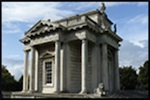
The Irish Architecture Foundation has announced the highlights of the fifth annual Open House Dublin, which takes place from 7 to 11 October 2010. Over the weekend architecturally significant Dublin buildings will open their doors the public, with free tours available.
More...
For your reading pleasure:
Open House 2010 Dublin Highlights announced: Irish Architecture Foundation
Solar assisted air conditioning comes to market: Treehugger
Slideshow of the Cooper-Hewitt national design awards in the US: Treehugger (some of the products and buildings are quite green)
Profile of the first legal third party appeal of a LEED (Leadership in Energy and Environmental Design - the leading US environmental rating system for buildings) rating: Green Building Law
Profiles of nine "near carbon neutral" communities: Jetson Green
Solar PV integrated into ceramic roof tiles: Jetson Green
Sustainable Industries' top ten green building products of 2010: Sustainable Industries
Altering clocks in winter "could cut carbon emissions": Energy Savings Trust

Dubbed the Infrax building, this is the new headquarters of the West Flanders Energy Company in Belgium, and I'm posting it for the simple reason that it's quite stunning and reasonably green. I've taken the info that follows on the building's technical features from the website of architects VK.
...The West Flanders Energy Company commissioned the building of a new high-quality office in Torhout, complete with a warehouse and storage space. WVEM wanted its new premises to be sustainable and have low energy consumption to underscore the example the company sets for society…
...The office building has three levels, with ground level extension used as a communal dining hall. The building covers 4800 m2…
…Extensive insulation of the building shell and the use of high-quality insulated glazing gave the entire building an overall insulation level of K35. The building is heated at low temperature by concrete core activation on the upper levels and floor heating at ground level. Small low-temperature convectors are used to fine-tune the temperature in each zone. The offices on the upper levels do not have lowered ceilings. In summer the concrete core activation provides very comfortable and energy-efficient cooling of high temperatures. The calculations for the design were produced using detailed comfort and energy simulations of the office….
...Soil was integrated in the design as a sustainable source of energy. A borehole energy storage (BES) field combined with a high-performance water pump provides basic low-temperature heating in the building in winter…
…At ground level the building has mechanical ventilation, while the upper levels are equipped with a hybrid ventilation concept, because for 60% of the office time a building can be ventilated naturally without compromising on comfort. A hybrid ventilation concept means the building is ventilated mechanically in winter and summer and naturally at other times of the year. The result is a significant saving of energy. Heat recuperation occurs in the central air group…
…The hybrid ventilation system has been integrated in an intelligent facade concept. This concept is a highly integrated design of architecture and engineering. The ventilation facilities have been integrated in a double facade system, comprising an insulated inner shell and a glazed outer skin. The cavity between the two can be drenched with outdoor air. Outside summer and winter, the cavity air heated by the sun is used to deliver fresh air to the offices by manually opening 'viewing windows’. 'Light windows' allow ample daylight to penetrate deep into the offices. The windows are set well back in the intelligent façade to shield them from direct sun radiation. What's more, the double facade structure provides better acoustic insulation between the busy ring road and the offices...
…Photovoltaic solar cells integrated in the facade provide the energy required to drive the primary pump of the BES field. This makes it possible to cool the offices by means of the BES field and concrete core activation without extra energy consumption. The offices have been equipped with energy-efficient lighting fixtures, complete with daylight control and presence detection sensors…
...The office building has been equipped with water-efficient sanitary furniture and plumbing to minimise the demand for water. Rainwater captured on the roof is reused in the building to flush toilets and urinals. The parking spaces for cars are pervious. Water originating from the metalled surfaces is infiltrated on site in green basins integrated in the car park landscape.
Sorry for the lack of blog updates last week - I had some trouble with our blog software and a blog post I published seemingly disappered. Anyway, here's a quick round up of recent links to get things kick-started again, mostly courtesy of Inhabitat and Treehugger.
Database will detail money saved from green retrofits in New York: Inhabitat
World's fastest train rolls off production line: Inhabitat
Work starts on UK's largest prefabricated straw bale building: Inhabitat
Can we use biomimicry to design cities? Treehugger
Toyota working on electric vehicle with Tesla: Inhabitat
University of Nottingham unveils solar-powered house: Inhabitat
A profile of Finland's entry into Solar Decathlon Europe: GreenBuildingAdvisor.com (Construct Ireland previously profiled the US Solar Decathlon here)
Green roofs now mandatory in Copenhagen: Treehugger
The Sustainable Energy Authority of Ireland (SEAI) today announced that it is inviting submissions from manufacturers and suppliers to the new Accelerated Capital Allowances (ACA) equipment categories announced by the government as part of the Finance Act.