
CI exclusive: Ryan dismisses reports of energy grant cuts
Written by News Desk
Government grant schemes for energy upgrade measures such as insulation, heating controls and renewable energy systems are running as normal, energy minister Eamon Ryan TD has told Construct Ireland. The minister said that €99m is set aside for the Greener Homes scheme, Home Energy Saving scheme and Warmer Homes scheme in 2011.
Renewable energy in Ireland grew 15% in last 4 years
Written by News Desk
Renewable energy in Ireland grew by an average of 15% per annum from 2005 to 2009 driven largely by a significant growth in wind energy of 28% per annum in that period, according to SEAI's latest Energy in Ireland report. Last year also witnessed a steady trend towards lower energy prices in Ireland for both domestic and business energy users.
This is the last in a series of blog posts by the architect Mark Stephens on going off grid. The full series can be found here.

A flooded percolation area is a serious health hazard
Welcome to this final blog post on living off gird, which focuses on the safe disposal of any wastewater from a house not connected to a public sewer.
This topic is probably the one that Ireland has the most experience with (both good and bad), due to the lack of sewerage infrastructure once you leave the main towns and cities. There are currently around 500,000 on-site wastewater treatment systems in Ireland, and many are believed to be contributing to groundwater pollution due to poor design, maintenance and lack of regulation over the years. The EU recently ruled against Ireland for this, and the mandatory inspection of such systems is expected to start within the next year.
This is also the one topic that will cause the most problems if you are looking for planning permission on a new house or more particularly the renovation of a ruin or abandoned house.
So let’s have a little look at the history of effluent disposal in modern times.
Septic tanks
The traditional septic tank would have been a concrete single chamber system — the outlet would have simply been piped out into a ditch that drained into the next field.
One problem arising with these systems is that frequently the farmer working the field would fill in the ditch, causing the effluent to start backing up. Then you could find yourself standing in a field slowly submerging in crap (this has happened to me on numerous occasions). A system like this also provides little treatment of effluent.
An article by Lenny Antonelli in issue twelve, volume four of Construct Ireland discusses precisely this problem and the bacterial ha�zards that are created.
The next stage on from a single-chamber septic tank was the dual chamber (again constructed in concrete). This system allows the solids to settle, with the second chamber taking the overflow which then exits the tank in a similar way. The same problem described above will also occur if the overflow effluent isn’t treated correctly. It’s therefore essential that a proper percolation or polishing filter system is designed and constructed within the curtilage of your own site.
Proprietary effluent treatment systems
A proprietary effluent treatment system utilises some form of aeration or mechanical purification/digestion before the wastewater exits the system. If properly designed for your site conditions, these systems can treat the effluent to a high standard, but consideration must still be given to what happens to wastewater when it enters the field. Most of these systems will require an electricity supply, which will add to your energy usage (and some may say goes against the off-grid ethos). One advantage of such systems is that it is possible to test and verify the quality of the effluent as most of the treatment is done in the unit itself, whereas with septic tanks more of the treatment takes places in the soil itself, making testing of final effluent difficult for these systems.
Composting toilets, reed bed systems etc
The principle of the composting toilet is straightforward — the solid waste goes into a separate section to the liquids, and the solids then dry and become first-class manure for the land. To create this compost requires a bit of time away from human contact which thereby breaks the cycle of the pathogens. Another option is rapid hot composting where usually sawdust or straw is added in order to kill all the known pathogens to humans in hours. But it will typically take about six months for compost to be available in dry conditions, longer if it is outdoors in a damp location.
Another popular way of percolating any waste in the ground is via a reed bed system, which is a natural solution that works ideally on a site with a fall where any effluent trickling through the reed bed is cleaned by micro-organisms living on the root system. Micro-organisms here break down the sewage in the presence of oxygen (ie aerobically). Your site will need to be physically suitable for a reed bed, and you may have difficulty convincing the planners that your system will work.
Planning
Any new effluent treatment system, either for a new house or a renovation will require planning permission. It is often thought that because a house was previously on the site (say for example, a wreck with no septic tank) you will have a better chance of obtaining planning permission. But I have seen many a dream quashed when planning is refused because the ground on site wasn’t suitable. The rules may be relaxed a little if the house already has a septic tank - a proposed upgrade may be acceptable if it improves treatment even if it doesn’t exactly meet the Environmental Protection Agency's Code of Practice. But you will find it harder to convince planners about any new system that falls outside the remit of the EPA Code of Practice.
If you're looking to install a new effluent treatment system for your new build or renovation project, start by contacting an experienced engineer or similar professional who can advise on the most appropriate system design for your site.
So that’s it, my take and discussion for living off-grid. With the country currently in economic turmoil, maybe living a simpler life not connected to electricity, water, sewerage etc doesn’t seem too mad cap after all.
Special thanks again to Nick Rosen's book How to Live Off-Grid.
Mark Stephens
ARB RIBA MRIAI is a UK and Ireland registered and chartered architect specialising in sustainable, unique designs.
Energy upgrade programmes escape budget cuts
Written by Jeff Colley
Government subsidies for energy efficiency and renewable energy have come through Budget 2011 unscathed in spite of swinging cuts across the economy.
Energy minister Eamon Ryan TD has announced a budget of €99m for energy upgrading Irish buildings in 2011 as the government ramps up for the launch of the National Energy Retrofit Programme (NERP).
Cancun climate talks apartments for 11 grand "clean construction"
Written by Lenny AntonelliWe're getting down to the real work on the January issue of the mag now. Expect to see case study articles on the renovated architectural landmark that is the former Carroll's cigarette factory in Dundalk, and on a couple of excellent passive houses. We'll also have features on the state of the economy, and on whether it makes more sense to use electrical-based heating devices as our power supply is gradually decarbonised. For now, here's some stories that might be of interest.
Ireland helping to break logjam in climate talks Irish Times
In the Guardian, George Monbiot says the UK is shifting on its commitment to zero carbon homes. Not surprisingly, the Tory housing minister disagrees.
The cost of not going green for architects Architect magazine
Our cities need intelligent transport systems Sustainable Cities Collective
Anyone want to buy an apartment in Donegal for 11 grand? Ireland After Nama
The Construction Industry Federation doesn't seem to like Nama terribly much Irish Times
New car engine generates electricity from exhaust heat Inhabitat
The solar industry is helping to revive declining industrial cities in the US midwest New York Times
The case for "clean construction" Reuters
Is there too much focus on building regulations and not enough on proper training for builders? Green Building Advisor
Ministers announce plan for European electricity supergrid
Written by News Desk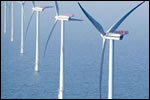
Energy minister Eamon Ryan has said that formal preparations for a European electricity supergrid have begun.
In Brussels today, energy ministers from ten European countries signed an agreement on the North Seas Countries Offshore Grid Initiative, which will aim to develop a supergrid in northern Europe, increase the amount of renewable energy produced in the Europe's northern seas and facilitate large scale offshore wind projects.
Bailout talks: four truths Ireland can't ignore
Written by Richard Douthwaite

Protester outside Dáil Éireann. Photo: William Murphy
By Richard Douthwaite
Ireland's negotiations with the ECB and the IMF are perhaps the most important talks that this country has engaged in since Michael Collins and Arthur Griffith negotiated the Anglo-Irish Treaty with the British Prime Minister, Lloyd George, in late 1921. This time, the Irish team is led by the governor of the Central Bank, Patrick Honohan, the financial regulator, Matthew Elderfield, and the head of the National Treasury Management Agency, John Corrigan. Unless these three men insist that the following four truths are accepted by those on the other side of the table, the country will be presented with an agreement that will blight its future for at least a generation.
Truth 1. If Ireland has to pay interest on the loans being negotiated at a rate which exceeds the rate at which the economy grows over the next few years, it will make the country's situation worse, not better.
Let's look at the figures. The Greek rescue plan involved loans at 5%. If the same rate is offered to Ireland and the Irish economy shrinks by an average of only 2% a year for the next four years as a result of the tax increases and spending cuts to be introduced under the government's deficit-reduction programme, the real interest rate would be 7%. This is simply not affordable. This is not just because of the interest the country will have to pay on the new debt facility but also because it will have to pay the same rate on the €72 bn of foreign debts the state owes already and on the overseas borrowings of the banks which the state has guaranteed.
The banks' loans are put at €34bn from German banks, €31bn from British banks, €19 bn from US banks, and $16bn from French banks, a total of €100bn. If all the €85bn of additional foreign debt under the ECB/IMF facility is drawn down, the country's overseas debt would be €257bn by the end of the four-year austerity programme. As a result , Ireland's public debt to national income ratio would be over 200%, an entirely unsustainable level for a country without its own currency. The interest burden would be €18bn a year. This amounts to half the total tax revenue that can be expected in 2015 and perhaps the whole of that year's trade surplus. More frighteningly, it would be €10,000 a year for each person in employment.
It could be claimed that the banks will pay some of this interest themselves but it is far more likely that they will still be making losses because of the bad debts caused by the continuing contraction of the economy. The state may even have to inject more capital into them. If the banks can pay the interest on their borrowings in Ireland they will be doing well.
Ireland is therefore totally unable to pay any interest on any new loans unless the rate of interest is no greater than its growth rate. If its growth is negative, the interest rate needs to be negative too. What is therefore needed is not a loan but a bailout – either a grant or a loan with an interest rate based on the economy's future economic performance.
Truth 2. Any grant or loan to Ireland will only buy time for the eurozone to come up with a cure for the whole sick system. Ireland should not be asked to bear more than its proportionate share of the cost of gaining this time which is for the benefit of every euro user.
Without exception, every eurozone country is running a budget deficit bigger than the Stability and Growth Pact allows and only five small countries have debt-GDP ratios below the 60% ceiling. As a result, all are planning budget cuts which, because they are being implemented simultaneously, could make matters worse by reducing national incomes at a time when national debts are still going up. In other words, the whole eurozone system is sick and Ireland and Greece are just bad cases of a disease which everyone shares. A collective cure needs to be found and it makes no sense for Ireland to make sacrifices unless such a cure is being planned. Part of any agreement between Ireland and the ECB/IMF team should therefore be an assurance that the eurozone is going to be transformed. Preventing governments running large budget deficits should not be part of that transformation since such deficits are a symptom that something is wrong rather than the prime cause. States need to be able to act counter-cyclically to protect their economies and, in any case, Ireland's problems are largely due to its banks.
The cost Ireland will bear for helping to stabilise the euro until an overall solution can be introduced is not just a matter of money. In fact, money would be the least part of the cost and it can always be repaid later. The greater part would be social — the poverty, the unemployment and the forced emigration — and the lives blighted as a result can never be fully restored. The transition to the new basis for the eurozone should therefore be quick and Ireland and other troubled countries should be supported by their less-sick partners while it is coming about.
Another element of the cost could be that Ireland will be asked to sell its national investments in companies like the ESB and CIE. This would raise very little money — recent estimates by Siobhan Creaton put their total market value at about €12bn — but would end the possibility of having these companies play a national developmental role. Under private ownership, immediate short-term profits would be the primary goal. The privatisation of Eircom is an awful warning. The company was loaded with debt by a succession of private owners and, as a result, did not have the resources to roll out broadband as quickly as happened in other countries. No-one will ever know how much income the country lost because of this failure.
Truth 3. The ECB bears a large share of the responsibility for the regulatory failure which led to the property bubble.
Since the eurozone was set up, the Irish Central Bank has been the local office of the ECB. The Central Bank knew the extent to which the commercial banks were going in for excessive property-based lending and gave details each month in its publications. These showed that Irish debts were increasing at an excessive rate in relation to the rate of income growth. For example, over at least three years between 2004 and the end of 2006, private sector debts to Irish banks grew at an average rate of just under 30% a year. This meant that the amount households and firms owed more than doubled in that short period. Tbe Central Bank also knew that most of this excessive lending – over 60% of it in some years - was to do with property. Some loans were for mortgages, others to finance construction companies and developers, and some to people who wished to borrow against their real estate assets. It sent all this information back to head office but it is not clear whether the ECB tried to persuade the Financial Regulator and the government of the dangers the country was running. If it did, it was ineffective. The ECB must pay a share of the cost for this failure.
Truth 4. There is a Plan B. Ireland doesn't have to take anything that is offered. It can leave the euro quickly and easily.
If the deal offered by the ECB/IMF negotiators is unsatisfactory, the Irish government can simply announce that, when the banks open the following morning, the accounts in them will be in a new currency – let's call it the harp - and all wages, rents, debts and other payments are to be paid in harp with immediate effect. (Cash payments would have to be made in euro notes and coins until harp ones could be introduced). After the announcement the government would issue itself with the new currency on a debt-free basis so that it no longer needed to borrow to cover its budget deficit. External debts in euros would be negotiated down to an affordable level. The devaluation brought about by the switch would make the country very competitive and any inflation the new money caused would provide the higher incomes needed to pay harp debts and support harp asset values, and thus strengthen the banking system.
The Irish negotiating team must make it very clear to the Commission and the ECB that Ireland would prefer to take this road and undergo an acute but brief crisis rather than accept a deal that entails an indefinite period of national penury with no guarantee that, eventually, its debts can be cleared. It is imperative that the ECB/IMF team understand that unless Ireland is offered a real road out of its present situation within the eurozone, the country will retrieve its national sovereignty and opt out.
Conclusion
Ireland's bank guarantee was a bluff which the government prayed would never be called because it knew that the country would be unable to honour it if it was. Well, now it has. The day it dreaded has come and the government needs to admit that Ireland cannot honour its guarantees without grants towards their cost from its EU partners. Loans will not suffice. Unless it gets this help, Ireland has no alternative but to renege on the guarantees and to build itself a future within the EU but outside the eurozone.
Richard Douthwaite is an economist and writer with a special interest in climate and energy issues and local economic development. His new book is Fleeing Vesuvius.
Are ghost estates a problem? Top green building products Solar hybrid technology launched
Written by Lenny AntonelliHere's a few stories that might distract you somewhat from the economic doom that surrounds us. Actually though, if you want to be totally distracted, maybe ignore the first two.
On big currencies and big banks New Economics Foundation
Are unfinished estates a problem or not? Ireland After Nama (and more here)Work begins on Europe's largest straw bale building The Guardian
Energy efficiency adds just $800 to the cost of a home, according to US research American Solar Energy Society
Are these the top ten green building products of 2010? Jetson Green
272kW hybrid solar installation launched in California Jetson Green
Green building priority number one — reduce energy use Green Building Advisor
China's coal consumption continues to grow New York Times
Five reasons electric cars will catch on The Infrastructurist
New funding for green energy companies in Ireland
Written by News Desk
Energy Minister Eamon Ryan today announced new funding for renewable energy companies in Ireland.
The funding is part of a Europe-wide programme that will be managed jointly by the European Commission, European Investment Bank and EU member states. It will assist eight carbon capture and storage and 34 renewable energy projects in the EU.
This is the fourth in a series of blog posts by the architect Mark Stephens on going off grid. The full series can be found here.
As we’re approaching the end of my guest blog posts, it’s lucky that the last two topics are probably the easiest for Ireland to handle — this post on how to get water and food, and the final blog post on the safe disposal of effluent. The reason these two are the easiest for Ireland to manage is due to effectively the complete lack of water delivery infrastructure once you get outside the major cities and towns.
Water
Let’s therefore deal with how we get water to our site, using a rural house as an example. The previous articles have dealt with shelter and providing heat and power. As long as you have the means to make a fire and put a cover over your head you can live pretty much anywhere, but it’s essential that you have a source of water in order to survive. The requirement for water divides neatly into two areas: the water to drink and the water to cook and wash with. So let’s look at ways you can obtain water from your site without being connected to a mains water supply. We’ll firstly discuss how you obtain your own source of water.
Wells & Boreholes
A new-traditional type of well is quite expensive to construct; instead a borehole is drilled to obtain water at a much smaller diameter. Normally about 150-300mm in diameter and drilled down to at least 50m, the resulting hole is lined with a steel or plastic tube and has a pump at the surface to pressurise the water into your house.
With so many variables (land, contours, geology etc) it’s difficult to give exact costs without one of the specialist firms that conduct the drilling visiting the site. A very approximate cost is somewhere in the region of €3000 to 6000.
Springs
A spring is water that percolates through porous earth until it reaches an impervious layer on which it collects. If the water bed is U-shaped then water is forced up resulting in a gush or trickle.
Streams and rivers
It is possible to obtain water directly from a stream or river, but there’s no guarantee of its cleanliness (which I will discuss in a moment). However, I have completed a few planning applications for new houses where the water is obtained from a stream.
In order for your water to be drinkable (or 'potable') then it will need to meet European safety standards; it is therefore essential for all of the methods described above to have a sample of your water tested and if required, to fit a purification system to purify the water further. Some councils in fact insist upon this sample water test as part of a planning application.
Let’s not discount one of the biggest sources of water available — rain. If they were careful, two adults and two children could theoretically manage for water solely on collected rainwater. What all of us can do however is implement a rainwater harvesting system, even if it’s only a basic collection system such as a water storage butt which can then be used for greywater in the house (flushing toilets etc) A more sophisticated system (ie a full rainwater harvesting system) could involve large underground storage tanks, physical and ultraviolet filters and delivery pumps / pipes. With water charges rising and metered costs likely to be introduced, some form of rainwater management is essential.
Food
So we have got water into our off-grid house, the next aspect in survival is providing enough food to survive. According to the excellent website A Self Sufficient Life http://www.aselfsufficientlife.com, approximately sixty square meters is enough land to feed a family of four for the year. As someone who’s dabbled in growing his own vegetables, it’s important to point out that a) It’s bloody hard work and b) it takes a lot of time. There is however nothing that replaces the taste of your own veg.
As well as growing vegetables, fruit, herbs etc. it is also possible for you to keep animals for milk and meat. It’s not impossible to keep a single cow or a few pigs, sheep or goats on a small piece of land, but as seen in the incredible upsurge in poultry sales, there are many people now keeping hens for eggs (myself included). A small group of hens (say six to ten) will constantly keep a family in eggs with a few to spare. Don’t forget that ducks and geese can also be kept for eggs and slaughter; interestingly the profitable life of a goose is six times as long as that of a chicken. Also, don’t forget that you could even keep a few hives of bees for honey.
When you have sown your seeds, tended your crops and reaped your vegetables, the key steps are that you should firstly eat seasonal food and then preserve and store food for eating later. There are stacks of books available on salting, drying, smoking, bottling and potting your meat, vegetables and fruit. And if the thought of becoming self-sufficient is turning you off then don’t forget that you could even brew your own wine, beer or cider from apples grown on your land.
The next and concluding article will deal with how to dispose of the effluent that you and your family produces, another area that Ireland has had to become self-sufficient in due to the lack of sewage infrastructure when you venture outside cities and towns. I’ll also be discussing the problems associated with every household pumping out their own effluent into the Irish countryside in poorly designed and constructed septic tanks.
More...
Wufi training workshop to be held in Dublin next month
Written by Jeff Colley
The Building Life Consultancy and Fraunhofer Institute for Building Physics are providing a two-day Wufi Pro training workshop in Dublin on 14-15 December.
This is only the third English language workshop of its kind to be offered in Europe according to the Building Life Consultancy, and will train members of the construction industry to use Fraunhofer’s Wufi Pro software for hygrothermal (heat and moisture) simulations of building fabric.
The ESB has launched Halo, the utility's new home energy upgrade and efficiency service. The Halo Installation Service is designed as a "one-stop solution" for home energy upgrades, the company said.
UK landlords to be fined for energy inefficiency / Plan Expo coverage / Wolfgang Feist interview
Written by Lenny AntonelliI've just returned from Plan Expo, where we spent two days flogging the new and past issues of Construct Ireland. There was a steady enough crowd over the two days, and I spent most of yesterday morning at the Rebuilding Ireland conference on the second floor of the Convention Centre (here's a pic of the view from up there). I tweeted some of the speeches — you can find all our Twitter coverage here. Tomorrow morning, I'll be covering US energy secretary Dr Steven Chu's appearance in Dublin. Anyway, here's some interesting stories you may or may not have seen:
Ireland's greenhouse gas emissions drop Irish Times
In the UK, landlords to face fines for energy inefficient properties Guardian
Electric Toyota Prius's coming to Ireland Dept of Energy
Metro North: good idea or not? Irish Economy
The 'VillageTown': a viable concept in urban planning? Sustainable Cities Collective
Why is the UK so bad at construction training? And do any of these lessons apply to Ireland? Guardian
What is the carbon footprint of building a house? Guardian
Should supermarkets and DIY chains insulate homes? Guardian
An interview with passive house pioneer Dr Wolfgang Feist Green Building Advisor
Will this be the first certified passive house building in New York? Green Building Advisor
More of Green Building Advisor's priorities for sustainable building projects: ensure durability, build smaller, reduce the need for driving
Wood-wrapped green office complex opens in Chile Inhabitat
Is this going to be the tallest timber building in the world? Treehugger
Ireland needs a plan, not a budget Ireland After Nama
US energy secretary to speak in Dublin on Friday
Written by News Desk
US secretary for energy Dr Steven Chu will speak in Dublin this Friday, 5 November. He will speak at the Pathways to 2050 International Energy Conference, which will take place at the National Convention Centre, Dublin.